Past/Vergangene Programs
'Merry Evenings in our House'
Music from the Life of James Joyce
May 30, 2025
Anna Huntley mezzo-soprano
Joshua Owen Mills tenor
Dietrich Henschel baritone
Arno Waschk piano (I)
Philip Headlam piano (II)
I - The Joyce Book (1932)
Tilly E.J. Moeran (1894 - 1950)
Watching the Needleboats at San Sabba Arnold Bax (1883 - 1953)
A Flower Given to My Daughter Albert Roussel (1869 - 1937)
She Weeps over Rahoon Herbert Hughes (1882 - 1937)
Tutto è Sciolto John Ireland (1879 - 1962)
On the Beach at Fontana Roger Sessions (1896 - 1985)
Simples Arthur Bliss (1891 - 1975)
Flood Herbert Howells (1892 - 1983)
Nightpiece George Antheil (1900 - 59)
Alone Edgardo Carducci (1889 - 1967)
A Memory of the Players in a Mirror at Midniight Eugene Goossens (1893 - 1962)
A Prayer Bernard Van Dieren (1887 - 1936)
Bahnhofstrasse C.W. Orr (1893 - 1976)
II - Merry Evenings in Our House
Bid Adieu to Girlish Days Jame Joyce (arr. E. Pendleton) Macushla D. MacMurrough The Man Who Broke the Bank at Monte Carlo Frederick Gilbert I dreamt I dwellt in Marble Halls Michael W. Balfe (from The Bohemian Girl) Al mio furor sfuggite Giuseppe Verdi (from Don Carlo) Viva Noè, Gran Patriarco from Italy Ancora un litro di quel bon from Trieste Quand un Vicomte Mireille Weep ye no more sad fountains John Dowland Dunque il mio fido (Amante Tradito II) Gio. Stefani Eamann na Chnoic (Ned of the Hill) from Ireland The Star of the County Down, My Lagan Love, The Croppy Boy, Finnegan’s Wake
-15 minute intermission between Part I and II. -Recorded for broadcast on Deutschlandfunk Kultur
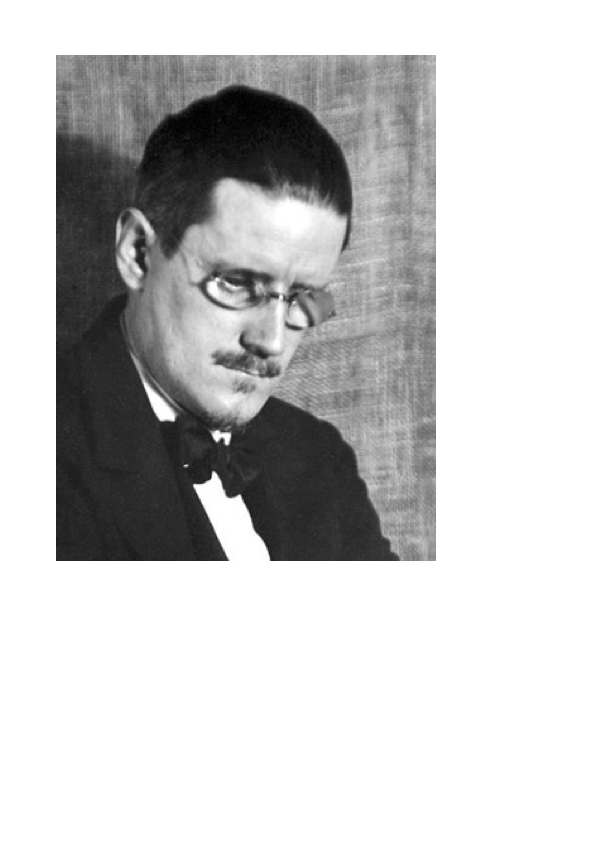
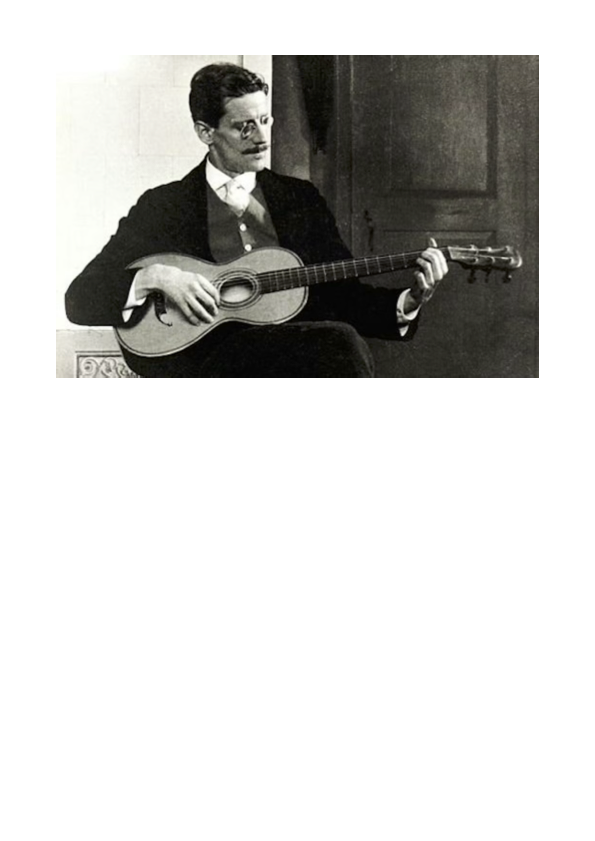
James Joyce (1882 - 1941) is ranked among the greatest authors of the 20th century. Primarily a novelist, he also published three collections of poetry, a play and a volume of short stories. Raised in Dublin, he left Ireland at age 22 and lived initially in Trieste, then in Rome, in Zurich during World War I and in 1920 moved to Paris.
Joyce’s three novels often take as their model the interior and ongoing processes of the mind, with sensory perceptions stirring the consciousness as it flows forward in time but also reaching backwards with sudden, strong, selective memories and where every-day objects and occurrences are revealed as symbols and signs from ancient stories and myths. Joyce’s wonderfully playful and inventive language imparts the impressionistic qualities of human experience in time and space.
Music was a strong influence on his writing: he attempted to distil and capture the quality, flow and atmosphere of music in his novels and stories, which abound in allusions to music.
I - The Joyce Book
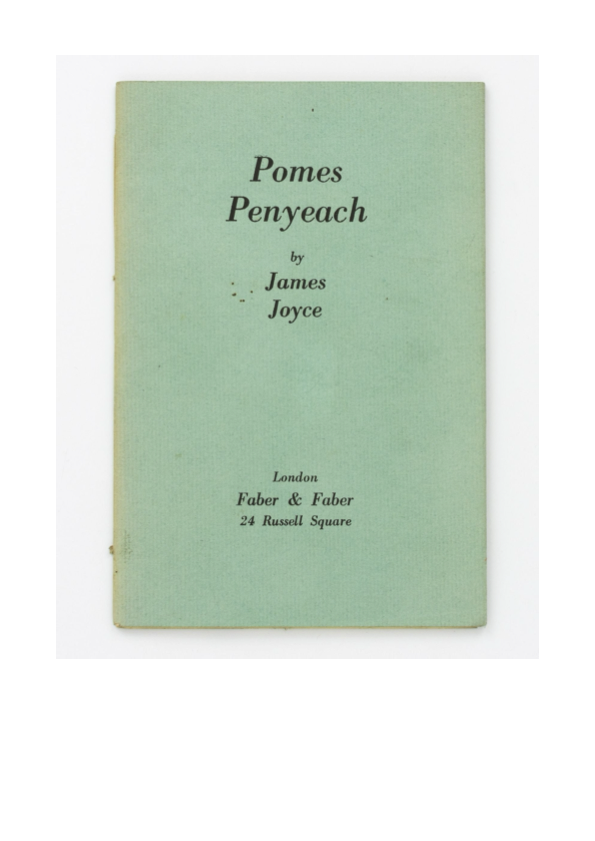
In 1929, composers Herbert Hughes and Arthur Bliss attended a festival of contemporary music in Paris with Joyce. They conceived the idea of setting to music Joyce’s poetry collection, Pomes Penyeach (1927), with each of the thirteen poems set by a different composer. Publication and performances were projected to raise funds to support Joyce and celebrate his work.
The composers, a mixture of internationally recognized and locally known, were from England, Italy, France and the United States. Their musical styles are extremely diverse: some songs are traditional and others are very avant-garde. Although not a song cycle in the traditional sense as there is no unity of narrative, the collection encapsulates many of the concert song styles of the 1920/30s and each song has a strong character and expression. The poems, written between 1904 - 1924, are short and lyrical though somewhat melancholy in character.
Premiered in London in 1932 and published in 1933, no profits or funds were generated for Joyce. The songs were never again published as a complete collection and thus disappeared from view for many years and is seldom performed even today.
II - ‘We used to have merry evenings in our house, used we not?’ James Joyce
Music was a vital element of life for Joyce. He sang and listened to very wide array of music, attended performances throughout his life, studied song texts and librettos carefully and often gathered friends and family for evening parties in order to sing and dance. As a young man, he placed well in several singing competitions and considered a professional career as a singer. He was friends with composers Philip Jarnach (an assistant to Busoni) and George Antheil.
Although he did not read music well, Joyce composed the melody for his own poem Bid Adieu to Girlish Days; his friend, organist and composer Edmund Pendleton, wrote the piano arrangement.
Victorian Parlour songs and light opera repertoire performed by so-called ‘Irish Tenors’ enjoyed huge popularity in concerts, radio broadcasts and recordings across the western world from 1910 - 1940. In 1903 Joyce met John McCormack, who by 1920 had achieved international stardom. Macushla (an Irish term of endearment) was often included in his concert repertoire.
Joyce loved comic songs from England -- known as Music Hall, where a typical entertainment mixed songs with comic skits and parodies -- and France, as performed by Felix Mayol and Yvonne Printemps. Two of Joyce’s favourites were The Man Who Broke the Bank at Monte Carlo, based on a real character who won money in casinos, and Quand un Vicomte, which satirizes how people talk only about themselves: Our little affairs, That's what comes first. Despite all the talk everywhere, What matters in the end, What matters most, is us.
Joyce had a deep and detailed knowledge of opera and operetta: it was a frequent topic of conversation for him and he wrote extensively in his correspondence about operas of the 18th and 19th centuries. Born in Ireland, Michael William Balfe (1808 – 70) was a highly successful singer and composer. His opera The Bohemian Girl, largely in bel canto style (Balfe had been a protégé of Rossini), was translated into French and German and regularly performed across Europe until the 1930s. I Dwellt in Marble Halls is sung by Arline, who describes her now vague childhood memories with her wealthy family. Joyce had favourites in 19th century opera repertoire: Wagner’s Die Meistersinger and Rossini’s Guillaume Tell for example. However, it was Verdi whom Joyce consistently praised, for his expression, dramaturgy and epic sweep.
Viva Noé is a hymn to Noah, the biblical patriarch, who, it is alleged, discovered wine after planting the first vineyard. Ancora un litro is a drinking song from Trieste, where the narrator cries: Give me another litre of that good stuff for the road; I can’t find the keys to the door so I can get home; I don’t want black coffee – give me grappa! Marietta, throw out the pot, I’ll sleep in the street.
Joyce was fond of Renaissance poetry and knew John Dowland’s lute songs and canzoni by Giovanni Stefani who published three anthologies with guitar accompaniment between 1618 - 1626 in Venice. Joyce sang Amante Tradito in a stage production of Robert Browning’s play In a Balcony with The English Players, a theatre company he helped to manage in Zurich, 1918-19.
No collection of music connected to James Joyce would be complete without traditional songs from his homeland, Ireland, which he sang and celebrated in his writing. We offer five on subjects including the power and excitement of love, the tragic sacrifices and yearning for an Ireland free of English rule and oppression and the comic story of Finnegan, which Joyce took as the title for his last novel, Finnegan’s Wake.
James Joyce (1882–1941) zählt zu den größten Autoren des 20. Jahrhunderts. Er war in erster Linie Romanautor, veröffentlichte aber auch drei Gedichtbände, ein Theaterstück und einen Band mit Kurzgeschichten. Aufgewachsen in Dublin, verließ er Irland im Alter von 22 Jahren und lebte zunächst in Triest, dann in Rom, während des Ersten Weltkriegs in Zürich und zog 1920 nach Paris.
Joyces drei Romane haben oft die inneren und fortwährenden Prozesse des Geistes zum Vorbild, wobei Sinneswahrnehmungen das Bewusstsein anregen, während es in der Zeit voranschreitet, aber auch mit plötzlichen, starken, selektiven Erinnerungen in die Vergangenheit zurückgreift und alltägliche Gegenstände und Ereignisse als Symbole und Zeichen aus alten Geschichten und Mythen offenbart werden. Joyces wunderbar verspielte und einfallsreiche Sprache vermittelt die impressionistischen Qualitäten der menschlichen Erfahrung in Zeit und Raum.
Musik hatte einen starken Einfluss auf sein Schreiben: Er versuchte, die Qualität, den Fluss und die Atmosphäre von Musik in seinen Romanen und Erzählungen, die reich an Anspielungen auf Musik sind, zu destillieren und einzufangen.
I –The Joycebook
1929 nahmen die Komponisten Herbert Hughes und Arthur Bliss zusammen mit Joyce an einem Festival für zeitgenössische Musik in Paris teil. Sie hatten die Idee, Joyces Gedichtsammlung Pomes Penyeach (1927) zu vertonen, wobei jedes der dreizehn Gedichte von einem anderen Komponisten vertont werden sollte. Die Veröffentlichung und Aufführung sollten dazu dienen, Mittel zur Unterstützung von Joyce zu sammeln und sein Werk zu würdigen.
Die Komponisten, darunter sowohl international bekannte als auch lokal bekannte Namen, stammten aus England, Italien, Frankreich und den Vereinigten Staaten. Ihre Musikstile sind äußerst vielfältig: Einige Lieder sind traditionell, andere sehr avantgardistisch. Obwohl es sich nicht um einen Liederzyklus im traditionellen Sinne handelt, da es keine narrative Einheit gibt, umfasst die Sammlung viele der Konzertliedstile der 1920er und 1930er Jahre, und jedes Lied hat einen starken Charakter und Ausdruck. Die zwischen 1904 und 1924 geschriebenen Gedichte sind kurz und lyrisch, wenn auch etwas melancholisch.
Das Werk wurde 1932 in London uraufgeführt und 1933 veröffentlicht, brachte Joyce jedoch keine Gewinne oder Einnahmen ein. Die Lieder wurden nie wieder als vollständige Sammlung veröffentlicht und verschwanden somit für viele Jahre aus dem Blickfeld und werden auch heute noch selten aufgeführt.
II - ‘We used to have merry evenings in our house, used we not?’ James Joyce
Musik war für Joyce ein wichtiger Bestandteil seines Lebens. Er sang und hörte eine Vielzahl unterschiedlicher Musikstücke, besuchte sein Leben lang Konzerte, studierte Liedtexte und Libretti sorgfältig und lud oft Freunde und Familie zu Abendveranstaltungen ein, um zu singen und zu tanzen. Als junger Mann belegte er bei mehreren Gesangswettbewerben gute Plätze und erwog eine professionelle Karriere als Sänger. Er war mit den Komponisten Philip Jarnach (einem Assistenten von Busoni) und George Antheil befreundet.
Obwohl er keine Noten lesen konnte, komponierte Joyce die Melodie zu seinem eigenen Gedicht Bid Adieu to Girlish Days; sein Freund, der Organist und Komponist Edmund Pendleton, schrieb das Klavierarrangement.
Viktorianische Salonlieder und Operettenrepertoire, aufgeführt von den sogenannten „irischen Tenören”, erfreuten sich von 1910 bis 1940 in Konzerten, Radiosendungen und Aufnahmen in der gesamten westlichen Welt großer Beliebtheit. 1903 lernte Joyce John McCormack kennen, der bis 1920 internationalen Ruhm erlangt hatte. Macushla (ein irischer Kosename) war oft Teil seines Konzertrepertoires.
Joyce liebte komische Lieder aus England – bekannt als Music Hall, wo eine typische Unterhaltung Lieder mit komischen Sketchen und Parodien mischte – und aus Frankreich, wie sie von Felix Mayol und Yvonne Printemps aufgeführt wurden. Zwei von Joyces Lieblingsliedern waren The Man Who Broke the Bank at Monte Carlo, basierend auf einer realen Figur, die in Casinos Geld gewann, und Quand un Vicomte, das satirisch darstellt, wie Menschen nur über sich selbst sprechen: Unsere kleinen Angelegenheiten, das steht an erster Stelle. Trotz all dem Gerede überall, was am Ende zählt, was am wichtigsten ist, sind wir.
Joyce hatte ein tiefes und detailliertes Wissen über Oper und Operette: Es war ein häufiges Gesprächsthema für ihn, und er schrieb in seiner Korrespondenz ausführlich über Opern des 18. und 19. Jahrhunderts. Der in Irland geborene Michael William Balfe (1808–1870) war ein sehr erfolgreicher Sänger und Komponist. Seine Oper The Bohemian Girl, die weitgehend im Belcanto-Stil gehalten ist (Balfe war ein Schützling Rossinis gewesen), wurde ins Französische und Deutsche übersetzt und bis in die 1930er Jahre regelmäßig in ganz Europa aufgeführt. I Dwellt in Marble Halls wird von Arline gesungen, die ihre mittlerweile vagen Kindheitserinnerungen mit ihrer wohlhabenden Familie beschreibt. Joyce hatte Favoriten im Opernrepertoire des 19. Jahrhunderts: Wagners Die Meistersinger und Rossinis Guillaume Tell zum Beispiel. Es war jedoch Verdi, den Joyce wegen seines Ausdrucks, seiner Dramaturgie und seiner epischen Breite immer wieder lobte.
Viva Noé ist eine Hymne an Noah, den biblischen Patriarchen, der angeblich den Wein entdeckt hat, nachdem er den ersten Weinberg gepflanzt hatte. Ancora un litro ist ein Trinklied aus Triest, in dem der Erzähler ruft: Gib mir noch einen Liter von dem guten Zeug für unterwegs; ich finde die Schlüssel zur Tür nicht, um nach Hause zu kommen; ich will keinen schwarzen Kaffee – gib mir Grappa! Marietta, schmeiß den Topf weg, ich schlafe auf der Straße.
Joyce liebte die Poesie der Renaissance und kannte die Lautenlieder von John Dowland und die Canzoni von Giovanni Stefani, der zwischen 1618 und 1626 in Venedig drei Anthologien mit Gitarrenbegleitung veröffentlichte. Joyce sang Amante Tradito in einer Bühnenproduktion von Robert Brownings Stück In a Balcony mit The English Players, einer Theatergruppe, die er 1918-19 in Zürich mitleitete.
Keine Musiksammlung zu James Joyce wäre vollständig ohne traditionelle Lieder aus seiner Heimat Irland, die er sang und in seinen Werken feierte. Wir bieten fünf Lieder zu Themen wie der Kraft und Aufregung der Liebe, den tragischen Opfern und der Sehnsucht nach einem Irland ohne englische Herrschaft und Unterdrückung sowie die komische Geschichte von Finnegan, die Joyce als Titel für seinen letzten Roman Finnegans Wake wählte.
-Ligetis einziges Solo-Lied mit Klavierbegleitung, Der Sommer, ist elegisch und schlicht und spiegelt Hölderlins Bilder von Wolken wider, die im Sommer hoch über Tälern, Feldern und Bächen dahintreiben, unterbrochen von mehreren dramatischen Ausrufen über die Unerbittlichkeit der Zeit.
-Unsuk Chins Liederzyklus snagS & Snarls für Ensemble wurde als Studien für ihre Oper Alice in Wonderland (2007) komponiert; Alice: Acrostic ist der erste Teil und vertont Lewis Carrolls Epiloggedicht zu Through the Looking Glass. Ein Akrostichon verwendet die Anfangsbuchstaben jeder Zeile, um ein Wort oder einen Satz zu bilden; hier ist es „Alice Pleasance Liddell“, der Name des Mädchens, das Carroll als Inspiration für die Titelfigur des Romans diente. Chins lange Melodielinien und Melismen fangen das sanfte Fließen eines Flusses an einem Sommertag ein, während das Klavier mit resonanten Klängen die Umgebung widerhallt, die von modaler Harmonie durchdrungen ist. Der Erzähler hat Freude daran, den eifrig lauschenden Kindern Geschichten zu erzählen, wird jedoch von der längst vergangenen, traumartigen Erinnerung an diese Szene heimgesucht.
-San Francisco Night vom Dichter, Dramatiker, Essayisten und Drehbuchautor Paul Gilson (1904–1963) nutzt Dutilleux' reichhaltige, intensive Harmonien und schwebende Melodielinien, um die Einsamkeit eines Reisenden in der Nacht auszudrücken, der sich nach einer Verbindung sehnt, um seine Verzweiflung zu lindern. Obwohl das Lied 1964 in New York komponiert und aufgeführt wurde, blieb es bis 1999 unveröffentlicht.
-Kenneth Heskeths Shimmerwords und Idle Songs, basierend auf Gedichten aus der chinesischen Tang-Dynastie (618–907 n. Chr.), sind charaktervoll und dynamisch: Reflexionen über Kunst (Shimmerwords) und den „meditativen Zustand der Einheit mit dem Alltag” (Idleness, aus dem Taoismus). Diese Auswahl von vier Liedern zeichnet sich durch eine starke Ich-Erzählung aus, die über eine lange Reise unter dem allgegenwärtigen Mond, die klatschsüchtigen (aber ängstlichen) Damen des kaiserlichen Hofes, das traurige Schicksal eines prächtigen (und magischen) roten Kakadus und die Beobachtungen des Erzählers über die ewige Zeit und Stille, die uns umgeben, reflektiert und ihre Methode offenbart, mit dieser großen Weite umzugehen.
-John Tavener versammelt drei Gedichte von W.B. Yeats in Mini Song Cycle for Gina: Das erste handelt vom Vergehen der Zeit und der Intensität einer vergangenen Liebe; das zweite ist ein Wiegenlied, das erst am Ende einen Hauch von Melancholie erkennen lässt; das dritte verbindet die Wildheit, Verzweiflung und Raserei der Leidenschaft mit den schrillen Schreien des Brachvogels, gefolgt von einer Rückkehr zum Eröffnungslied. Der Rahmen ist gewagt einfach und rückt die Worte und langen, ausgedehnten Melodielinien vor den Hintergrund einer beharrlich läutenden Glocke in der Klavierbegleitung.
-On the Palmy Beach für Sopran, Cello und Klavier vereint vier Dichter, Wallace Stevens, Kathleen Jamie, Norman MacCaig und Emily Dickinson, in „eigenwilligen Ansichten über das Leben im Meer und am Strand”. Farbiau of Florida ist ein beschwörendes Bild der Leuchtkraft auf der rauen See und den Wellen bei Nacht. The Glass-hulled Boat und Basking Shark lenken unsere Aufmerksamkeit auf eine Qualle und einen Riesenhai: Die Beziehung des Erzählers zu jedem von ihnen provoziert Beobachtungen, Vorstellungen und Reflexionen über die Existenz und Geschichte der Kreaturen im Vergleich zu unserer eigenen. In I started early erwacht das Meer selbst zum Leben und flößt der Erzählerin Ehrfurcht und Angst ein, bevor sie vor der mächtigen Flut in die Sicherheit der Stadt flieht; es ist unbekanntes Terrain für das Meer, das sich verbeugt und zurückzieht.
American Song Greats :
Marc Blitzstein and Ned Rorem
22. November 2023 KM28, Karl-Marx-Straße 28,12043 Berlin
Sidney Walker mezzo soprano
Andrew Munn bass Philip Headlam piano
Is 5 (1929) (e.e.cummings) Marc Blitzstein
1. after all white horses are in bed
2. when life is quite through with
3. mr youse needn’t be so spry
4. Jimmie’s got a goil
5. you are like the snow
War Scenes (1969)(Walt Whitman) Ned Rorem
1. A Night Battle
2. Specimen Case
3. An Incident
4. Inauguration Ball
5. The Real War
From Marion’s Book (1960) (e.e.cummings) Marc Blitzstein
1. o by the by
2. when life is quite through with
3. what if a much of a which of a wind
4. silent unday by silently not night
5. until and i heard
6. yes is a pleasant country
7. open your heart
[encores: Fraught; The Cradle will Rock; Dusty Sun]
In 1929, Blitzstein set when life is quite through with and followed with four more poems from e.e.cummings’ collection Is 5 (1926). Cummings’ avant-garde style is evident throughout: free flowing syntax, unconventional grammar, spacing and spelling, modern argot, unusual juxtapositions and fleeting imagery. Blitzstein responds with vivid characterization, freshness of musical invention and touching lyricism.
He returned to cummings’ poetry in 1960 for From Marion’s Book, a commission from soprano Alice Esty, drawing mostly from the 1944 collection, 1 x 1 (dedicated to Marion Morehouse, cummings’ wife). Although when life makes a second appearance, the cycle, from Blitzstein’s mature composing years, is rich, imaginative and lyrical; the songs effortlessly capture the range of the subjects (childlike awe at kite-flying, elegiac, the strength of the human spirit, a cortege, the joy of being alive, the freshness of love, the vastness of time and space) and deep emotions of the poems.
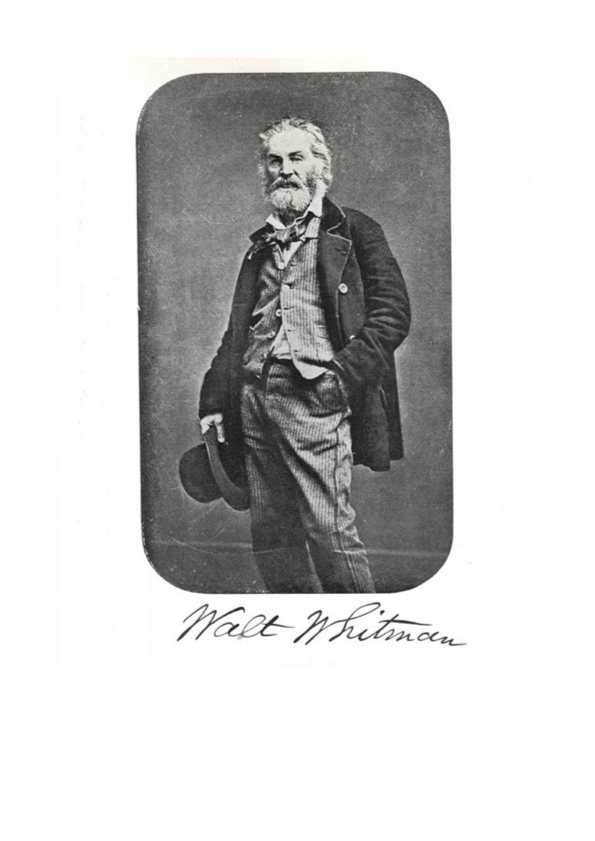
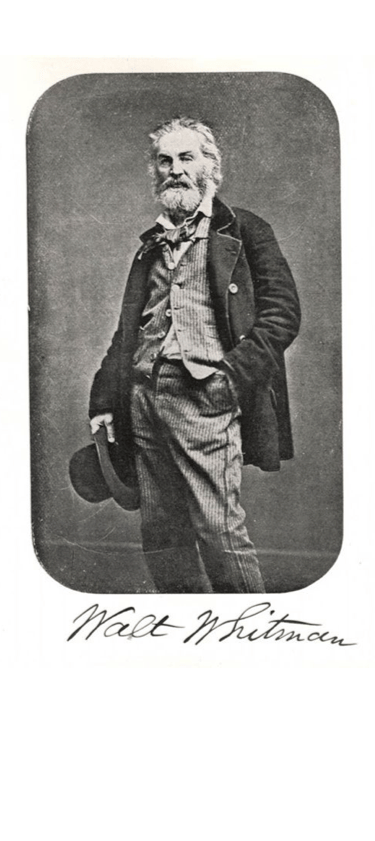
Walt Whitman’s Specimen Days and Collect (1882), a prose work of autobiographical sketches, contains impressions in a style resembling diary entries as well as reportage from his time as a volunteer nurse in army hospitals in 1862 - 3, during the American Civil War as well as first hand observations of the brutal battle at Chancellorsville and its aftermath.
Rorem has cut the text to heighten the dramatic and recitation-like expression. The musical material is taut and compact, from which he draws an interconnected web of harmonies and declamation, and is fittingly stark although it also expresses the poignancy, irony and deep reflections of Whitman’s testament of war.
War Scenes is dedicated ‘to those who died in Vietnam, both sides’. Composed at the height of America’s costly and divisive military involvement in Vietnam, Rorem wrote, ‘I felt intensely about the war. I chose Walt Whitman's words as much for political reasons as for artistic reasons. Although Whitman’s words concern the Civil War, they could apply to the Trojan War or the Vietnam War: all war is senseless, and I think if that cycle has any power at all, it is owed to Walt Whitman's power’.
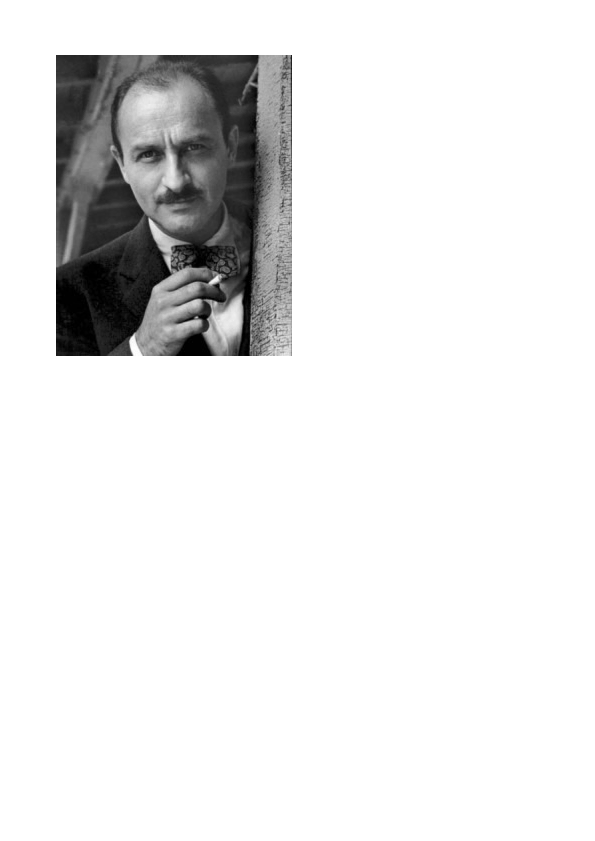
A genuinely original and uniquely American composer, Marc Blitzstein’s (1905-64) talent for wit, sophistication and lyricism excelled in song, opera, theatre and musicals from his initial success with The Cradle Will Rock in 1937 until his death. Born in Philadelphia, a piano prodigy and student of Nadia Boulanger and Schoenberg in Europe, he was a close colleague of many great artists throughout his career including Orson Welles, Lillian Hellman, Aaron Copland, and Bertolt Brecht as well as mentor, friend and profound musical and dramaturgical influence on Leonard Bernstein.
Born in Chicago, Ned Rorem (1923 - 2022) studied at Northwestern University Music School, Curtis Institute, Juilliard School, the Tanglewood Music Centre and with composer Virgil Thomson. From 1949 - 58, he lived in Paris. His wide ranging output includes three symphonies, concertos, chamber music, ten operas, choral music and ballets. His mastery of the art of song is widely acknowledged; the first of his over 500 songs was published in 1948. He was commissioned by leading American orchestras and performed by many prominent singers and soloists. His awards include a Pulitzer and a Grammy as well as prizes for his books and published diaries.
1929 vertonte Blitzstein when life is quite through with und anschließend vier weitere Gedichte aus e.e. cummings’ Sammlung Is 5 (1926). Cummings’ avantgardistischer Stil ist durchweg erkennbar: frei fließende Syntax, unkonventionelle Grammatik, Interpunktion und Rechtschreibung, moderne Umgangssprache, ungewöhnliche Gegenüberstellungen und flüchtige Bildsprache. Blitzstein antwortet darauf mit lebhafter Charakterisierung, frischer musikalischer Erfindungskraft und berührender Lyrik.
1960 kehrte er für From Marion’s Book, einem Auftragswerk der Sopranistin Alice Esty, zu Cummings’ Gedichten zurück und schöpfte dabei hauptsächlich aus der Sammlung 1 x 1 (1944, Marion Morehouse, Cummings’ Frau, gewidmet). Obwohl when life ein zweites Mal auftaucht, ist der Zyklus aus Blitzsteins reifen Kompositionsjahren reichhaltig, fantasievoll und lyrisch; die Lieder fangen mühelos die Bandbreite der Themen (kindliche Ehrfurcht vor dem Drachensteigen, Elegie, die Kraft des menschlichen Geistes, ein Trauerzug, die Freude am Leben, die Frische der Liebe, die Weite von Zeit und Raum) und die tiefen Emotionen der Gedichte ein.
Walt Whitmans Specimen Days and Collect (1882), ein Prosawerk mit autobiografischen Skizzen, enthält Eindrücke in einem Stil, der Tagebucheinträgen ähnelt, sowie Reportagen aus seiner Zeit als freiwilliger Krankenpfleger in Militärkrankenhäusern in den Jahren 1862–1863 während des amerikanischen Bürgerkriegs sowie Beobachtungen aus erster Hand über die brutale Schlacht von Chancellorsville und ihre Folgen.
Rorem hat den Text gekürzt, um den dramatischen und rezitationsartigen Ausdruck zu verstärken. Das musikalische Material ist straff und kompakt, aus dem er ein miteinander verbundenes Netz aus Harmonien und Deklamation webt, und es ist angemessen karg, obwohl es auch die Ergriffenheit, Ironie und tiefen Reflexionen von Whitmans Kriegstestament zum Ausdruck bringt.
War Scenes ist „denen gewidmet, die in Vietnam starben, auf beiden Seiten”. Komponiert auf dem Höhepunkt des kostspieligen und spaltenden militärischen Engagements der USA in Vietnam, schrieb Rorem: „Ich habe den Krieg sehr intensiv empfunden. Ich habe Walt Whitmans Worte sowohl aus politischen als auch aus künstlerischen Gründen gewählt. Obwohl Whitmans Worte den Bürgerkrieg betreffen, könnten sie auch auf den Trojanischen Krieg oder den Vietnamkrieg zutreffen: Jeder Krieg ist sinnlos, und ich glaube, wenn dieser Zyklus überhaupt eine Kraft hat, dann verdankt er sie Walt Whitmans Kraft.“
Marc Blitzstein (1905–1964) war ein wahrhaft origineller und einzigartiger amerikanischer Komponist, dessen Talent für Witz, Raffinesse und Lyrik sich in Liedern, Opern, Theaterstücken und Musicals widerspiegelte, angefangen von seinem ersten Erfolg mit The Cradle Will Rock im Jahr 1937 bis zu seinem Tod. Der in Philadelphia geborene Klaviervirtuose und Schüler von Nadia Boulanger und Schönberg in Europa war während seiner gesamten Karriere ein enger Kollege vieler großer Künstler, darunter Orson Welles, Lillian Hellman, Aaron Copland und Bertolt Brecht, sowie Mentor, Freund und wichtiger musikalischer und dramaturgischer Einfluss für Leonard Bernstein.
Der in Chicago geborene Ned Rorem (1923–2022) studierte an der Northwestern University Music School, am Curtis Institute, an der Juilliard School, am Tanglewood Music Centre und bei dem Komponisten Virgil Thomson. Von 1949 bis 1958 lebte er in Paris. Sein breit gefächertes Werk umfasst drei Sinfonien, Konzerte, Kammermusik, zehn Opern, Chormusik und Ballette. Seine Meisterschaft in der Kunst des Liedes ist weithin anerkannt: Das erste seiner über 500 Lieder wurde 1948 veröffentlicht. Er erhielt Aufträge von vielen führenden amerikanischen Orchestern und wurde von zahlreichen prominenten Sängern und Solisten aufgeführt. Zu seinen Auszeichnungen gehören ein Pulitzer-Preis und ein Grammy sowie Preise für seine Bücher und veröffentlichten Tagebücher.
'What’s the Matter with Me?’
-songs von Marc Blitzstein
1. Juni, 2022 Bürgersaal Zehlendorf Teltower Damm 18, Berlin
Karen Schriesheim Sopran
Sidney Walker Mezzo opran
Cairan Ryan Bariton
Philip Headlam Klavier
Fraught (1938) (aus No for an Answer) What’s the Matter With Me? (1929) aus The Cradle Will Rock (1935-6):
Nickel Under the Foot; The Cradle Will Rock; Croon Spoon; Joe Worker; Art for Art’s Sake
What Will It Be? (1949) (aus Regina)
Lullaby (1948) (aus No for an Answer)
Monday Morning Blues (1955) (aus Reuben, Reuben) songs aus Shakespeare:
Lullaby (1958); Fool’s Song (1950)
aus Walt Whitman songs (1925/28):
What Weeping Face; Shine, shine, shine
aus Marion’s Book (Auswahl), Gedichte von e.e. cummings (1960): o by the by; when life is quite through with; until I heard Lovely to Get Back to Love (1945) Then (1962) (aus The Magic Barrel) The Way You Are (1935) Hard to Say (1955) (aus Reuben, Reuben)
Born in Philadelphia in 1905, Marc Blitzstein showed musical prowess from an early age. Studying piano, he progessed swiftly under renowned pedagogue Alexander Siloti (former student of Liszt and Tchaikovsky) and made his professional debut with the Philadelphia Orchestra aged 21. He began to compose songs and piano pieces in his teens and studied composition at the Curtis Institute (1924-26) and with Nadia Boulanger in Paris and Arnold Schoenberg in Berlin (1927).
Upon returning from Europe, he embarked on a freelance career as composer, pianist, translator, writer and lecturer on new music. He was dedicated to creating a new and genuinely ‘American’ music and was a colleague and friend to many like-minded composers including Aaron Copland, Henry Cowell and Charles Seeger.
His compositional style could be called ‘American modernism’, using the harmonic and modal music language taught by Boulanger but suffused with strong rhythm (syncopated and asymmetric) and described -by Blitzstein himself- as wild, dissonant, and percussive. He drew on many popular dance rhythms and song forms and had wonderful facility for lyricism and long melodic lines.
He composed for piano (Sonata, 1927, Concerto, 1931), a string quartet (1931), several ballets and symphonic pieces as well as for film (Surf and Seaweed, 1931; The Spanish Earth, 1937; Native Land, 1942). However, the majority of his oeuvre is song, musical theatre and opera. Unusually for a composer, he wrote the text, lyrics and even librettos for most of his vocal and theatre pieces.
He joined The Group Theatre, New York where he worked closely with playwright Clifford Odets, directors Harold Clurman, Elia Kazan, Lee Strasberg and producer Cheryl Crawford. Their aesthetic was for naturalistic, ensemble productions of new plays about pressing social issues, often from a leftwing attitude and viewpoint. Blitzstein wrote a choral opera, The Condemned (1933) about the grave miscarriage of justice in the Sacco and Vanzetti executions (a subject on which he was composing an opera when he died); he maintained staunch leftwing social and political views his entire life and had a strong social conscience.
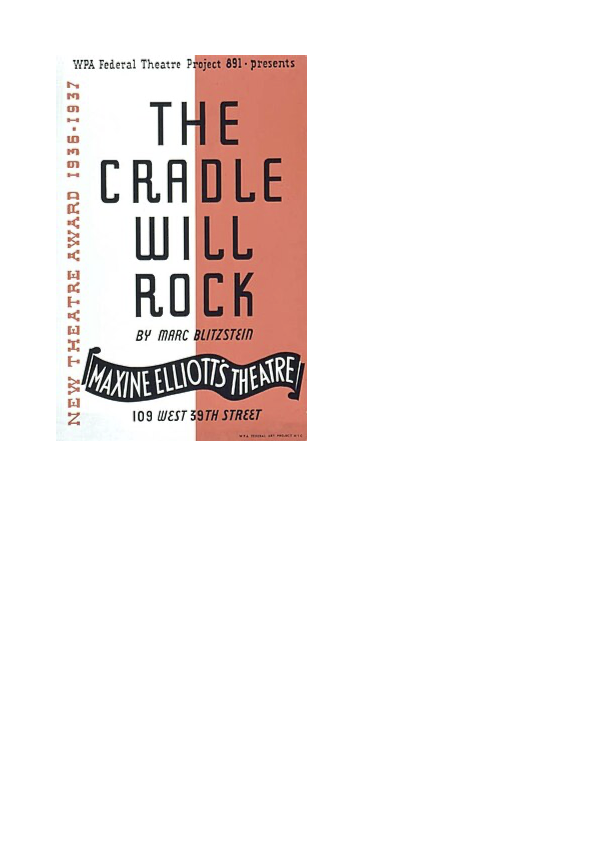
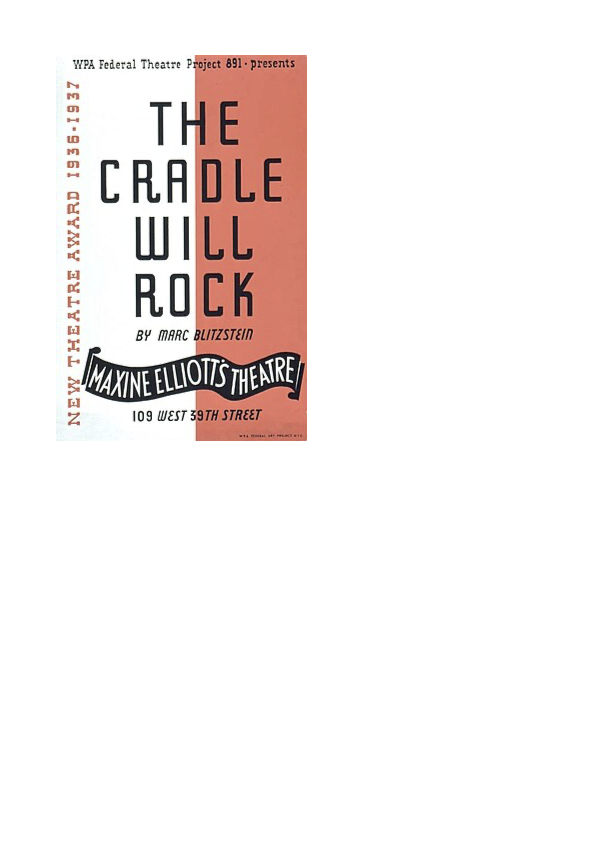
Early successes include Triple-Sec (1929) but it was his musical The Cradle Will Rock (1937) that launched his renown. Commissioned by the Federal Theatre Project and modelled on the Bertolt Brecht-Kurt Weill theatre works from Berlin, it contains biting social criticism and is strongly pro-union. Set in Steeltown, U.S.A., it is an allegory and satire of corporate greed and capitalist corruption. The FTP attempted to shut it down just hours before the premiere so the director Orson Welles and producer John Houseman led the cast and crew---and audience--along the street to another theatre in New York to perform; Blitzstein himself played piano onstage as the cast sang from the auditorium (regulations prevented them from being on the stage). It was a great success and revived a year later for over a 100 performances.
Blitzstein continued to work with Welles, composing music for his later theatre productions. In 1939, the then Harvard university student Leonard Bernstein led a production of Cradle in Boston. Blitzstein attended and a close friendship was formed. He became a mentor to the younger composer and his considerable influence on word setting, melodic formation, dramaturgy and composing for the theatre is evident. Bernstein championed Blitzstein’s music during his conducting career and named him godfather to his daughter in 1952.
Other works include the radio commission I’ve Got the Tune (1937; in which Blitzstein gave a role to a newly arrived emigre, Lotte Lenya (wife of Kurt Weill) and a quasi-opera, No for an Answer (1941). He enlisted in the Air Force in 1942, serving in the U.K. until WWII ended (one result of which was the Airborne Symphony for soloists, male chorus, and orchestra, 1946). His most ambitious and significant work, Regina, an opera based on Lillian Hellman’s play The Little Foxes, premiered in 1949, initially on Broadway. He also composed music (with two songs) for Hellman's play Toys in the Attic (1960).
Blitzstein adapted and translated Brecht/Weill’s Threepenny Opera which ran off-Broadway from 1954 for 2500 performances and established this previously unknown work into the English speaking world. He also translated The Rise and Fall of the City of Mahagonny and Brecht's play Mother Courage and Her Children.
The 1950s proved more a difficult time for the composer’s own new creations: his larger works, Reuben, Reuben (1955), a musical, and Juno (1959; based on Sean O’Casey’s 1924 play Juno and the Paycock) had little success despite top quality casts and direction. The New York Philharmonic commissioned Lear: A Study in 1958 and despite critical acclaim has not been performed since.
Blitzstein died unexpectedly in 1964, while vacationing in Martinique and left many unfinished and unpublished works. The brilliance, wit, emotional depth, melodic invention, solid craftsmanship and sheer fun of his music continues to touch listeners. The Cradle Will Rock, and Regina continue to be performed although the larger part of his music and theatre works remain unknown and under-appreciated.
Marc Blitzstein wurde 1905 in Philadelphia geboren und zeigte schon früh musikalisches Talent. Er studierte Klavier und machte unter dem renommierten Pädagogen Alexander Siloti (einem ehemaligen Schüler von Liszt und Tschaikowski) rasante Fortschritte. Mit 21 Jahren gab er sein professionelles Debüt mit dem Philadelphia Orchestra. Bereits als Teenager begann er, Lieder und Klavierstücke zu komponieren, und studierte von 1924 bis 1926 Komposition am Curtis Institute sowie bei Nadia Boulanger in Paris und Arnold Schönberg in Berlin (1927).
Nach seiner Rückkehr aus Europa begann er eine freiberufliche Karriere als Komponist, Pianist, Übersetzer, Schriftsteller und Dozent für neue Musik. Er widmete sich der Schaffung einer neuen und genuin „amerikanischen” Musik und war Kollege und Freund vieler gleichgesinnter Komponisten, darunter Aaron Copland, Henry Cowell und Charles Seeger.
Sein Kompositionsstil könnte als „amerikanischer Modernismus” bezeichnet werden, da er die von Boulanger gelehrte harmonische und modale Musiksprache verwendete, diese jedoch mit starken Rhythmen (synkopisch und asymmetrisch) durchsetzte und (von Blitzstein selbst) als wild, dissonant und perkussiv beschrieb. Er griff auf viele populäre Tanzrhythmen und Liedformen zurück und hatte eine wunderbare Begabung für Lyrik und lange Melodielinien.
Er komponierte für Klavier (Sonate, 1927, Konzert, 1931), ein Streichquartett (1931), mehrere Ballette und symphonische Stücke sowie für Filme (Surf and Seaweed, 1931; The Spanish Earth, 1937; Native Land, 1942). Der Großteil seines Œuvres besteht jedoch aus Liedern, Musiktheater und Opern. Ungewöhnlich für einen Komponisten schrieb er die Texte, Liedtexte und sogar Libretti für die meisten seiner Vokal- und Theaterstücke selbst.
Er schloss sich dem Group Theatre in New York an, wo er eng mit dem Dramatiker Clifford Odets, den Regisseuren Harold Clurman, Elia Kazan und Lee Strasberg sowie der Produzentin Cheryl Crawford zusammenarbeitete. Ihre Ästhetik war geprägt von naturalistischen Ensembleproduktionen neuer Stücke über drängende soziale Themen, oft aus einer linken Haltung und Perspektive heraus. Blitzstein schrieb eine Choroper, The Condemned (1933), über den schweren Justizirrtum bei den Hinrichtungen von Sacco und Vanzetti (ein Thema, zu dem er bei seinem Tod gerade eine Oper komponierte); er vertrat sein ganzes Leben lang überzeugte linke soziale und politische Ansichten und hatte ein starkes soziales Gewissen.
Zu seinen frühen Erfolgen zählt Triple-Sec (1929), doch erst sein Musical The Cradle Will Rock (1937) machte ihn berühmt. Im Auftrag des Federal Theatre Project und nach dem Vorbild der Theaterstücke von Bertolt Brecht und Kurt Weill aus Berlin entstanden, enthält es bissige Sozialkritik und ist stark gewerkschaftsfreundlich. Das Stück spielt in Steeltown, USA, und ist eine Allegorie und Satire auf die Gier der Unternehmen und die Korruption des Kapitalismus. Das FTP versuchte, das Stück wenige Stunden vor der Premiere zu verbieten, woraufhin der Regisseur Orson Welles und der Produzent John Houseman die Darsteller, die Crew und das Publikum auf die Straße führten und zu einem anderen Theater in New York brachten, um dort aufzutreten. Blitzstein selbst spielte auf der Bühne Klavier, während die Darsteller aus dem Zuschauerraum sangen (die Vorschriften verboten ihnen, auf der Bühne zu stehen). Das Stück war ein großer Erfolg und wurde ein Jahr später für über 100 Vorstellungen wiederaufgenommen.
Blitzstein arbeitete weiterhin mit Welles zusammen und komponierte Musik für dessen spätere Theaterproduktionen. 1939 leitete der damalige Harvard-Student Leonard Bernstein eine Inszenierung von Cradle in Boston. Blitzstein war dabei und es entstand eine enge Freundschaft. Er wurde zum Mentor des jüngeren Komponisten, und sein beträchtlicher Einfluss auf die Vertonung von Texten, die Melodieführung, die Dramaturgie und das Komponieren für das Theater ist offensichtlich. Bernstein setzte sich während seiner Dirigentenlaufbahn für Blitzsteins Musik ein und ernannte ihn 1952 zum Paten seiner Tochter.
Weitere Werke sind das Auftragswerk für das Radio I’ve Got the Tune (1937; in dem Blitzstein der neu angekommenen Emigrantin Lotte Lenya, der Frau von Kurt Weill, eine Rolle gab) und eine Quasi-Oper mit dem Titel No for an Answer (1941). Er trat 1942 in die Luftwaffe ein und diente bis zum Ende des Zweiten Weltkriegs in Großbritannien (ein Ergebnis davon war die Airborne Symphony für Solisten, Männerchor und Orchester, 1946). Sein ambitioniertestes und bedeutendstes Werk, Regina, eine Oper nach Lillian Hellmans Theaterstück The Little Foxes, wurde 1949 zunächst am Broadway uraufgeführt. Er komponierte auch die Musik (mit zwei Songs) für Hellmans Theaterstück Toys in the Attic (1960).
Blitzstein adaptierte und übersetzte Brecht/Weills Dreigroschenoper, die ab 1954 2500 Mal Off-Broadway aufgeführt wurde und dieses zuvor unbekannte Werk in der englischsprachigen Welt etablierte. Er übersetzte auch Aufstieg und Fall der Stadt Mahagonny und Brechts Stück Mutter Courage und ihre Kinder.
Die 1950er Jahre erwiesen sich für die neuen Werke des Komponisten als schwieriger: Seine größeren Werke, Reuben, Reuben (1955), ein Musical, und Juno (1959; basierend auf Sean O’Caseys Stück Juno and the Paycock von 1924) hatten trotz hochkarätiger Besetzung und Regie wenig Erfolg. Die New York Philharmonic gab 1958 Lear: A Study in Auftrag, das trotz positiver Kritiken seitdem nicht mehr aufgeführt wurde.
Blitzstein starb 1964 unerwartet während eines Urlaubs auf Martinique und hinterließ viele unvollendete und unveröffentlichte Werke. Die Brillanz, der Witz, die emotionale Tiefe, die melodische Kreativität, die solide Handwerkskunst und der pure Spaß seiner Musik berühren die Zuhörer bis heute. The Cradle Will Rock und Regina werden weiterhin aufgeführt, obwohl der größte Teil seiner Musik- und Theaterwerke unbekannt und unterschätzt bleibt.
3 x 2 : Kreuzung 2000 17. Juni, 2024 KM28, Karl-Marx-Straße 28, 12043 Berlin
Susanna Hurrell Sopran Ariana Gibbard Sopran^ Simon Wallfisch Cello Philip Headlam Klavier
Der Sommer (1989) György Ligeti Alice - Acrostic (2004) Unsuk Chin (von snagS & Snarls; arr. klavier von Holger Groschopp, 2014)
San Francisco Night (1963) Henri Dutilleux Shimmerwords and Idle Songs (2007) *^ Kenneth Hesketh
I Travelling Moon
III a) A Song of the Palace - c) The Red Cockatoo
IV Sitting Idle at the North Window
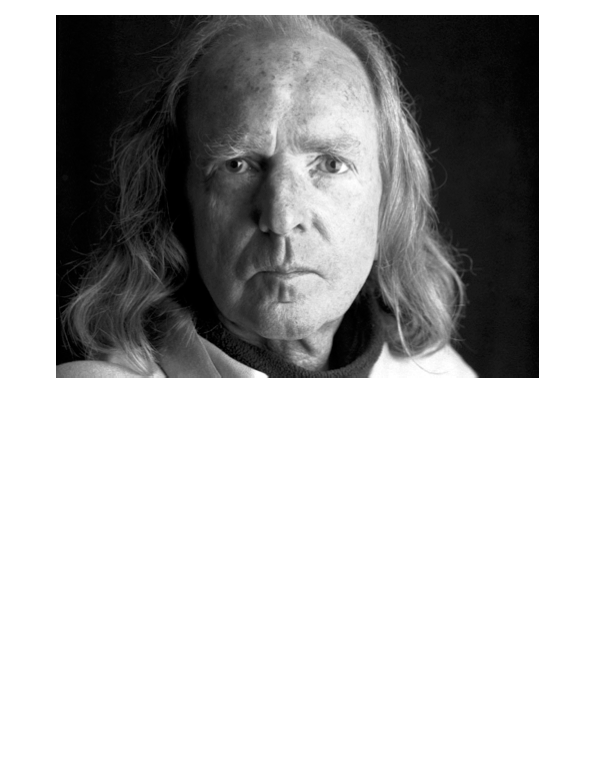
A Mini Song Cycle for Gina (1984) John Tavener
i. When you are old ii. A Cradle Song
iii. He reproves the Curlew iv. When you are old

On the Palmy Beach (2019) * Judith Weir -für sopran, cello, klavier
i. Fabliau of Florida ii. The Glass-hulled Boat
iii. Basking Shark iv. I started Early – Took my Dog
* Erstaufführung in Deutschland
-Ligeti’s only solo song with piano, Der Sommer is elegiac and simple, reflecting Hölderlin’s images of clouds in summer drifting high over the valleys, fields and streams and punctuated by several dramatic exclamations on the inexorability of time.
-Unsuk Chin’s song cycle snagS & Snarls, for ensemble, were composed as studies for her opera Alice in Wonderland (2007); Alice: Acrostic is the first and sets Lewis Carroll’s epilogue poem to Through the Looking Glass. An acrostic uses the initial letter of each line to spell a word or phrase; here the result is ‘Alice Pleasance Liddell’, the name of the girl who was Carroll’s inspiration for the novel’s title character. Chin’s long melodic lines and melismas capture the gentle flowing of a river on a summer day while the piano adds resonant ringing, echoing sounds of the surrounding landscape suffused by modal harmony. The narrator takes delight in recaling the telling of stories to eagerly listening children but is haunted by the long-ago, dream-like memory of the scene.
-San Francisco Night by poet, playwright, essayist and screenwriter. Paul Gilson (1904 - 63) features Dutilleux’s rich, intense harmony and floating melodic lines to express the loneliness of a traveller in night-time, yearning for a connection to lift his despair. Although composed and performed in New York in 1964, the song remained unpublished until 1999.
-Kenneth Hesketh’s Shimmerwords and Idle Songs, from Chinese Tang Dynasty (618 - 907 C.E.) poetry, are characterful and dynamic: reflections on art (Shimmerwords) and the ‘meditative state being at one with everyday life’ (Idleness, from Tao-ism). This selection of four songs has strong first-person narration that reflects on a long journey under the ever-present moon, the gossiping (but fearful) ladies of the Imperial court, the forlorn fate of a magnificent (and magical) Red Cockatoo and a narrator’s observations of the everlasting time and stillness that surround us, revealing their method for dealing with this great expanse.
-John Tavener gathers three of W.B. Yeats’ poems in Mini Song Cycle for Gina: the first concerns the passing of time and intensity of a past love; the second is a lullaby that hints at melancholy only at the end; the third merges the wildness, despair and madness of passion with the stark cries of the curlew, followed by a return to the opening song. The framework is daringly simple, bringing the words and long, spun-out melodic lines to the fore against a persistent tolling bell in the piano accompaniment.
-On the Palmy Beach for soprano, cello and piano sets four poets, Wallace Stevens, Kathleen Jamie, Norman MacCaig and Emily Dickinson, in ‘idiosyncratic views of life in the sea and on the beach’. Farbiau of Florida is an incantatory image of luminescence on the rough seas and waves at night. The Glass-hulled Boat and Basking Shark bring a jellyfish and a basking shark closer to our attention: the relationship of the narrator to each provokes observations, imaginings and reflections on the creature’s existence and history next to our own. In I started early, the sea itself comes alive, inspiring awe and fear in the narrator before she flees the mighty incoming tide to the safety of the town; it is unfamiliar territory to the sea who bows and withdraws.
A Flower Given to my Daughter
Frail the white rose and frail are
Her hands that gave
Whose soul is sere and paler
Than time's wan wave.
Rosefrail and fair -- yet frailest
A wonder wild
In gentle eyes thou veilest
My blueveined child.
James Joyce
The Way You Are by Marc Blitzstein
Are you divine? Are you ideal?
Let's drop that line - you're only real.
There's no need for ignoring your imperfections.
I like you best the way you are.
Though there are those who think you're mean
And goodness knows you're none too keen.
Your brain is full of cotton wool in large sections.
I like you best the way you are.
Your other friends who know your whims and ways
all damn you, though with faint praise.
They claim your mind is out of joint.
You miss the point of Pirandello's plays.
Well who cares? So does the star...
Your vacant gaze greets me and then
this happy daze is here again.
O please don't change into some stranger tomorrow. I like you best the way you are.



Der Sommer
Noch ist die Zeit des Jahrs zu sehn, und die Gefilde
Des Sommers stehn in ihrem Glanz, in ihrer Milde;
Des Feldes Grün ist prächtig ausgebreitet,
Allwo der Bach hinab mit Wellen gleitet.
So zieht der Tag hinaus durch Berg und Tale,
Mit seiner Unaufhaltsamkeit und seinem Strahle,
Und Wolken ziehn in Ruh`, in hohen Räumen,
Es scheint das Jahr mit Herrlichkeit zu säumen.
Friedrich Hölderlin (1770-1843)
When You Are Old
When you are old and grey and full of sleep,
And nodding by the fire, take down this book,
And slowly read, and dream of the soft look
Your eyes had once, and of their shadows deep
How many loved your moments of glad grace,
And loved your beauty with love false or true,
But one man loved the pilgrim soul in you,
And loved the sorrows of your changing face;
And bending down beside the glowing bars,
Murmur, a little sadly, how Love fled
And paced upon the mountains overhead
And hid his face amid a crowd of stars.
W.B. Yeats (1865-1939)
Star of the County Down
Near Banbridge Town in the County Down
One morning last July
A boreen green came a sweet colleen
And she smiled as she passed me by
She looked so sweet from her two bare feet
To the sheen of her nut brown hair
Such a coaxing elf, sure I shook myself
For to see I was really there.
From Bantry Bay down to Derry Quay
And from Galway to Dublin Town
No maid I've seen like the brown colleen
That I met in the County Down
As she onward sped, sure I scratched my head
And I looked with a feelin' rare
And I says, says I, to a passer-by
"Whose the maid with the nut brown hair?"
He smiled at me and he says's, says's he
"That's the gem of Ireland's crown
Young Rosie McCann from the banks of a Bann
She's the star of the County Down"
o by the by
has anybody seen
little you-I
who stood on a green
hill and threw
his wish at blue
with a swoop and a dart
out flew his wish
(it dived like a fish
but it climbed like a dream)
throbbing like a heart
singing like a flame
blue took it my
far beyond far
and high beyond high
bluer took it your
but bluest took it our
away beyond where
what wonderful thing
is the end of a string
(murmurs little you-I
as the hill becomes nil)
and will somebody tell
me why people let go
e.e.cummings
An Incident
In one of the fights before Atlanta, a rebel soldier, of large size, evidently a young man, was mortally wounded top of head, so that the brains partially exuded.
He lived three days, lying on his back on the spot where he first dropt.
He dug with his heel in the ground during that time a hole big enough to put in a couple of ordinary knapsacks.
He just lay there in the open air, and with little intermission kept his heel going night and day.
Some of our soldiers then moved him to a house, but he died in a few minutes.
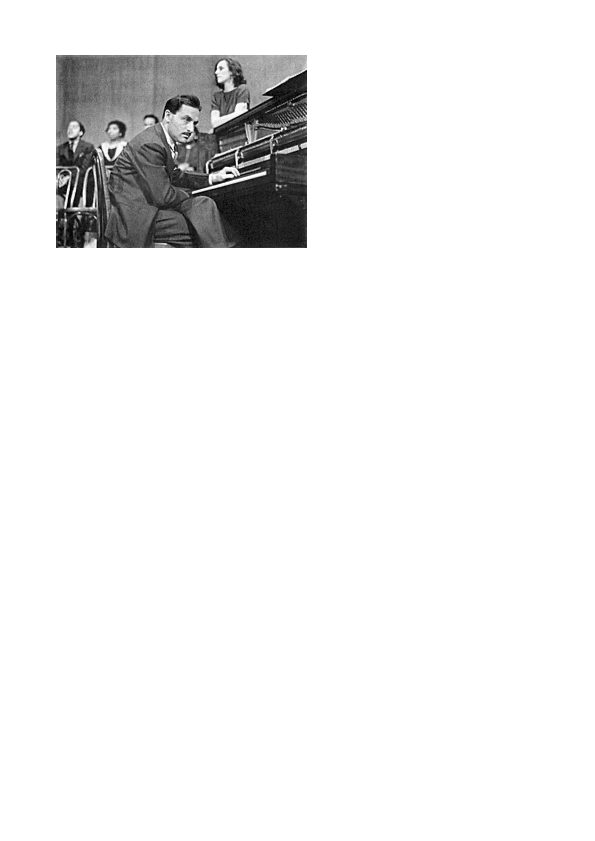
Marc Blitzstein playing for
The Cradle Will Rock,
New York, 1937
‘Merry Evenings in our House' - Music from the Life of James Joyce
May 30, 2025
Anna Huntley mezzo-soprano Joshua Owen Mills tenor
Dietrich Henschel baritone
Arno Waschk piano (I) Philip Headlam piano (II)
___________________________________________________________
I - The Joyce Book (1932)
Tilly E.J. Moeran (1894 - 1950)
Watching the Needleboats
at San Sabba Arnold Bax (1883 - 1953)
A Flower Given to My Daughter Albert Roussel (1869 - 1937)
She Weeps over Rahoon Herbert Hughes (1882- 1937)
Tutto è Sciolto John Ireland (1879 - 1962)
On the Beach at Fontana Roger Sessions (1896 - 1985)
Simples Arthur Bliss (1891- 1975)
Flood Herbert Howells (1892 - 1983)
Nightpiece George Antheil (1900 - 59)
Alone Edgardo Carducci (1889 - 1967)
A Memory of the Players in a
Mirror at Midnight Eugene Goossens (1893 - 1962)
A Prayer Bernard Van Dieren (1887 - 1936)
Bahnhofstrasse C.W. Orr (1893 - 1976)
II - Merry Evenings in Our House
Bid Adieu to Girlish Days James Joyce (arr. E.Pendleton)
Macushla D. MacMurrough
The Man Who Broke the Bank at
Monte Carlo Frederick Gilbert
I dreamt I dwellt in Marble Halls Michael W. Balfe (from The Bohemian Girl)
Al mio furor sfuggite Giuseppe Verdi (from Don Carlo)
Viva Noè, Gran Patriarco from Italy
Ancora un litro di quel bon from Trieste
Quand un Vicomte Mireille
Weep ye no more sad fountains John Dowland
Dunque il mio fido (Amante Tradito II) Giovanni Stefani
Eamann na Chnoic (Ned of the Hill), from Ireland
The Star of the County Down, My Lagan Love,
The Croppy Boy, Finnegan’s Wake
-15 minute intermission between Part I and II. Recorded for broadcast on Deutschlandfunk Kultur
James Joyce (1882 - 1941) is ranked among the greatest authors of the 20th century. Primarily a novelist, he also published three collections of poetry, a play and a volume of short stories. Raised in Dublin, he left Ireland at age 22 and lived initially in Trieste, then in Rome, in Zurich during World War I and in 1920 moved to Paris.
Joyce’s three novels often take as their model the interior and ongoing processes of the mind, with sensory perceptions stirring the consciousness as it flows forward in time but also reaching backwards with sudden, strong, selective memories and where every-day objects and occurrences are revealed as symbols and signs from ancient stories and myths. Joyce’s wonderfully playful and inventive language imparts the impressionistic qualities of human experience in time and space.
Music was a strong influence on his writing: he attempted to distil and capture the quality, flow and atmosphere of music in his novels and stories, which abound in allusions to music.
I - The Joyce Book
In 1929, composers Herbert Hughes and Arthur Bliss attended a festival of contemporary music in Paris with Joyce. They conceived the idea of setting to music Joyce’s poetry collection, Pomes Penyeach (1927), with each of the thirteen poems set by a different composer. Publication and performances were projected to raise funds to support Joyce and celebrate his work.
The composers, a mixture of internationally recognized and locally known, were from England, Italy, France and the United States. Their musical styles are extremely diverse: some songs are traditional and others are very avant-garde. Although not a song cycle in the traditional sense as there is no unity of narrative, the collection encapsulates many of the concert song styles of the 1920/30s and each song has a strong character and expression. The poems, written between 1904 - 1924, are short and lyrical though somewhat melancholy in character.
Premiered in London in 1932 and published in 1933, no profits or funds were generated for Joyce. The songs were never again published as a complete collection and thus disappeared from view for many years and is seldom performed even today.
II - ‘We used to have merry evenings in our house, used we not?’ James Joyce
Music was a vital element of life for Joyce. He sang and listened to very wide array of music, attended performances throughout his life, studied song texts and librettos carefully and often gathered friends and family for evening parties in order to sing and dance. As a young man, he placed well in several singing competitions and considered a professional career as a singer. He was friends with composers Philip Jarnach (an assistant to Busoni) and George Antheil.
Although he did not read music well, Joyce composed the melody for his own poem Bid Adieu to Girlish Days; his friend, organist and composer Edmund Pendleton, wrote the piano arrangement.
Victorian Parlour songs and light opera repertoire performed by so-called ‘Irish Tenors’ enjoyed huge popularity in concerts, radio broadcasts and recordings across the western world from 1910 - 1940. In 1903 Joyce met John McCormack, who by 1920 had achieved international stardom. Macushla (an Irish term of endearment) was often included in his concert repertoire.
Joyce loved comic songs from England -- known as Music Hall, where a typical entertainment mixed songs with comic skits and parodies -- and France, as performed by Felix Mayol and Yvonne Printemps. Two of Joyce’s favourites were The Man Who Broke the Bank at Monte Carlo, based on a real character who won money in casinos, and Quand un Vicomte, which satirizes how people talk only about themselves: Our little affairs, That's what comes first. Despite all the talk everywhere, What matters in the end, What matters most, is us.
Joyce had a deep and detailed knowledge of opera and operetta: it was a frequent topic of conversation for him and he wrote extensively in his correspondence about operas of the 18th and 19th centuries. Born in Ireland, Michael William Balfe (1808 – 70) was a highly successful singer and composer. His opera The Bohemian Girl, largely in bel canto style (Balfe had been a protégé of Rossini), was translated into French and German and regularly performed across Europe until the 1930s. I Dwellt in Marble Halls is sung by Arline, who describes her now vague childhood memories with her wealthy family. Joyce had favourites in 19th century opera repertoire: Wagner’s Die Meistersinger and Rossini’s Guillaume Tell for example. However, it was Verdi whom Joyce consistently praised, for his expression, dramaturgy and epic sweep.
Viva Noé is a hymn to Noah, the biblical patriarch, who, it is alleged, discovered wine after planting the first vineyard. Ancora un litro is a drinking song from Trieste, where the narrator cries: Give me another litre of that good stuff for the road; I can’t find the keys to the door so I can get home; I don’t want black coffee – give me grappa! Marietta, throw out the pot, I’ll sleep in the street.
Joyce was fond of Renaissance poetry and knew John Dowland’s lute songs and canzoni by Giovanni Stefani who published three anthologies with guitar accompaniment between 1618 - 1626 in Venice. Joyce sang Amante Tradito in a stage production of Robert Browning’s play In a Balcony with The English Players, a theatre company he helped to manage in Zurich, 1918-19.
No collection of music connected to James Joyce would be complete without traditional songs from his homeland, Ireland, which he sang and celebrated in his writing. We offer five on subjects including the power and excitement of love, the tragic sacrifices and yearning for an Ireland free of English rule and oppression and the comic story of Finnegan, which Joyce took as the title for his last novel, Finnegan’s Wake.
James Joyce (1882–1941) zählt zu den größten Autoren des 20. Jahrhunderts. Er war in erster Linie Romanautor, veröffentlichte aber auch drei Gedichtbände, ein Theaterstück und einen Band mit Kurzgeschichten. Aufgewachsen in Dublin, verließ er Irland im Alter von 22 Jahren und lebte zunächst in Triest, dann in Rom, während des Ersten Weltkriegs in Zürich und zog 1920 nach Paris.
Joyces drei Romane haben oft die inneren und fortwährenden Prozesse des Geistes zum Vorbild, wobei Sinneswahrnehmungen das Bewusstsein anregen, während es in der Zeit voranschreitet, aber auch mit plötzlichen, starken, selektiven Erinnerungen in die Vergangenheit zurückgreift und alltägliche Gegenstände und Ereignisse als Symbole und Zeichen aus alten Geschichten und Mythen offenbart werden. Joyces wunderbar verspielte und einfallsreiche Sprache vermittelt die impressionistischen Qualitäten der menschlichen Erfahrung in Zeit und Raum.
Musik hatte einen starken Einfluss auf sein Schreiben: Er versuchte, die Qualität, den Fluss und die Atmosphäre von Musik in seinen Romanen und Erzählungen, die reich an Anspielungen auf Musik sind, zu destillieren und einzufangen.
I –The Joycebook
1929 nahmen die Komponisten Herbert Hughes und Arthur Bliss zusammen mit Joyce an einem Festival für zeitgenössische Musik in Paris teil. Sie hatten die Idee, Joyces Gedichtsammlung Pomes Penyeach (1927) zu vertonen, wobei jedes der dreizehn Gedichte von einem anderen Komponisten vertont werden sollte. Die Veröffentlichung und Aufführung sollten dazu dienen, Mittel zur Unterstützung von Joyce zu sammeln und sein Werk zu würdigen.
Die Komponisten, darunter sowohl international bekannte als auch lokal bekannte Namen, stammten aus England, Italien, Frankreich und den Vereinigten Staaten. Ihre Musikstile sind äußerst vielfältig: Einige Lieder sind traditionell, andere sehr avantgardistisch. Obwohl es sich nicht um einen Liederzyklus im traditionellen Sinne handelt, da es keine narrative Einheit gibt, umfasst die Sammlung viele der Konzertliedstile der 1920er und 1930er Jahre, und jedes Lied hat einen starken Charakter und Ausdruck. Die zwischen 1904 und 1924 geschriebenen Gedichte sind kurz und lyrisch, wenn auch etwas melancholisch.
Das Werk wurde 1932 in London uraufgeführt und 1933 veröffentlicht, brachte Joyce jedoch keine Gewinne oder Einnahmen ein. Die Lieder wurden nie wieder als vollständige Sammlung veröffentlicht und verschwanden somit für viele Jahre aus dem Blickfeld und werden auch heute noch selten aufgeführt.
II - ‘We used to have merry evenings in our house, used we not?’ James Joyce
Musik war für Joyce ein wichtiger Bestandteil seines Lebens. Er sang und hörte eine Vielzahl unterschiedlicher Musikstücke, besuchte sein Leben lang Konzerte, studierte Liedtexte und Libretti sorgfältig und lud oft Freunde und Familie zu Abendveranstaltungen ein, um zu singen und zu tanzen. Als junger Mann belegte er bei mehreren Gesangswettbewerben gute Plätze und erwog eine professionelle Karriere als Sänger. Er war mit den Komponisten Philip Jarnach (einem Assistenten von Busoni) und George Antheil befreundet.
Obwohl er keine Noten lesen konnte, komponierte Joyce die Melodie zu seinem eigenen Gedicht Bid Adieu to Girlish Days; sein Freund, der Organist und Komponist Edmund Pendleton, schrieb das Klavierarrangement.
Viktorianische Salonlieder und Operettenrepertoire, aufgeführt von den sogenannten „irischen Tenören”, erfreuten sich von 1910 bis 1940 in Konzerten, Radiosendungen und Aufnahmen in der gesamten westlichen Welt großer Beliebtheit. 1903 lernte Joyce John McCormack kennen, der bis 1920 internationalen Ruhm erlangt hatte. Macushla (ein irischer Kosename) war oft Teil seines Konzertrepertoires.
Joyce liebte komische Lieder aus England – bekannt als Music Hall, wo eine typische Unterhaltung Lieder mit komischen Sketchen und Parodien mischte – und aus Frankreich, wie sie von Felix Mayol und Yvonne Printemps aufgeführt wurden. Zwei von Joyces Lieblingsliedern waren The Man Who Broke the Bank at Monte Carlo, basierend auf einer realen Figur, die in Casinos Geld gewann, und Quand un Vicomte, das satirisch darstellt, wie Menschen nur über sich selbst sprechen: Unsere kleinen Angelegenheiten, das steht an erster Stelle. Trotz all dem Gerede überall, was am Ende zählt, was am wichtigsten ist, sind wir.
Joyce hatte ein tiefes und detailliertes Wissen über Oper und Operette: Es war ein häufiges Gesprächsthema für ihn, und er schrieb in seiner Korrespondenz ausführlich über Opern des 18. und 19. Jahrhunderts. Der in Irland geborene Michael William Balfe (1808–1870) war ein sehr erfolgreicher Sänger und Komponist. Seine Oper The Bohemian Girl, die weitgehend im Belcanto-Stil gehalten ist (Balfe war ein Schützling Rossinis gewesen), wurde ins Französische und Deutsche übersetzt und bis in die 1930er Jahre regelmäßig in ganz Europa aufgeführt. I Dwellt in Marble Halls wird von Arline gesungen, die ihre mittlerweile vagen Kindheitserinnerungen mit ihrer wohlhabenden Familie beschreibt. Joyce hatte Favoriten im Opernrepertoire des 19. Jahrhunderts: Wagners Die Meistersinger und Rossinis Guillaume Tell zum Beispiel. Es war jedoch Verdi, den Joyce wegen seines Ausdrucks, seiner Dramaturgie und seiner epischen Breite immer wieder lobte.
Viva Noé ist eine Hymne an Noah, den biblischen Patriarchen, der angeblich den Wein entdeckt hat, nachdem er den ersten Weinberg gepflanzt hatte. Ancora un litro ist ein Trinklied aus Triest, in dem der Erzähler ruft: Gib mir noch einen Liter von dem guten Zeug für unterwegs; ich finde die Schlüssel zur Tür nicht, um nach Hause zu kommen; ich will keinen schwarzen Kaffee – gib mir Grappa! Marietta, schmeiß den Topf weg, ich schlafe auf der Straße.
Joyce liebte die Poesie der Renaissance und kannte die Lautenlieder von John Dowland und die Canzoni von Giovanni Stefani, der zwischen 1618 und 1626 in Venedig drei Anthologien mit Gitarrenbegleitung veröffentlichte. Joyce sang Amante Tradito in einer Bühnenproduktion von Robert Brownings Stück In a Balcony mit The English Players, einer Theatergruppe, die er 1918-19 in Zürich mitleitete.
Keine Musiksammlung zu James Joyce wäre vollständig ohne traditionelle Lieder aus seiner Heimat Irland, die er sang und in seinen Werken feierte. Wir bieten fünf Lieder zu Themen wie der Kraft und Aufregung der Liebe, den tragischen Opfern und der Sehnsucht nach einem Irland ohne englische Herrschaft und Unterdrückung sowie die komische Geschichte von Finnegan, die Joyce als Titel für seinen letzten Roman Finnegans Wake wählte.
-Ligetis einziges Solo-Lied mit Klavierbegleitung, Der Sommer, ist elegisch und schlicht und spiegelt Hölderlins Bilder von Wolken wider, die im Sommer hoch über Tälern, Feldern und Bächen dahintreiben, unterbrochen von mehreren dramatischen Ausrufen über die Unerbittlichkeit der Zeit.
-Unsuk Chins Liederzyklus snagS & Snarls für Ensemble wurde als Studien für ihre Oper Alice in Wonderland (2007) komponiert; Alice: Acrostic ist der erste Teil und vertont Lewis Carrolls Epiloggedicht zu Through the Looking Glass. Ein Akrostichon verwendet die Anfangsbuchstaben jeder Zeile, um ein Wort oder einen Satz zu bilden; hier ist es „Alice Pleasance Liddell“, der Name des Mädchens, das Carroll als Inspiration für die Titelfigur des Romans diente. Chins lange Melodielinien und Melismen fangen das sanfte Fließen eines Flusses an einem Sommertag ein, während das Klavier mit resonanten Klängen die Umgebung widerhallt, die von modaler Harmonie durchdrungen ist. Der Erzähler hat Freude daran, den eifrig lauschenden Kindern Geschichten zu erzählen, wird jedoch von der längst vergangenen, traumartigen Erinnerung an diese Szene heimgesucht.
-San Francisco Night vom Dichter, Dramatiker, Essayisten und Drehbuchautor Paul Gilson (1904–1963) nutzt Dutilleux' reichhaltige, intensive Harmonien und schwebende Melodielinien, um die Einsamkeit eines Reisenden in der Nacht auszudrücken, der sich nach einer Verbindung sehnt, um seine Verzweiflung zu lindern. Obwohl das Lied 1964 in New York komponiert und aufgeführt wurde, blieb es bis 1999 unveröffentlicht.
-Kenneth Heskeths Shimmerwords und Idle Songs, basierend auf Gedichten aus der chinesischen Tang-Dynastie (618–907 n. Chr.), sind charaktervoll und dynamisch: Reflexionen über Kunst (Shimmerwords) und den „meditativen Zustand der Einheit mit dem Alltag” (Idleness, aus dem Taoismus). Diese Auswahl von vier Liedern zeichnet sich durch eine starke Ich-Erzählung aus, die über eine lange Reise unter dem allgegenwärtigen Mond, die klatschsüchtigen (aber ängstlichen) Damen des kaiserlichen Hofes, das traurige Schicksal eines prächtigen (und magischen) roten Kakadus und die Beobachtungen des Erzählers über die ewige Zeit und Stille, die uns umgeben, reflektiert und ihre Methode offenbart, mit dieser großen Weite umzugehen.
-John Tavener versammelt drei Gedichte von W.B. Yeats in Mini Song Cycle for Gina: Das erste handelt vom Vergehen der Zeit und der Intensität einer vergangenen Liebe; das zweite ist ein Wiegenlied, das erst am Ende einen Hauch von Melancholie erkennen lässt; das dritte verbindet die Wildheit, Verzweiflung und Raserei der Leidenschaft mit den schrillen Schreien des Brachvogels, gefolgt von einer Rückkehr zum Eröffnungslied. Der Rahmen ist gewagt einfach und rückt die Worte und langen, ausgedehnten Melodielinien vor den Hintergrund einer beharrlich läutenden Glocke in der Klavierbegleitung.
-On the Palmy Beach für Sopran, Cello und Klavier vereint vier Dichter, Wallace Stevens, Kathleen Jamie, Norman MacCaig und Emily Dickinson, in „eigenwilligen Ansichten über das Leben im Meer und am Strand”. Farbiau of Florida ist ein beschwörendes Bild der Leuchtkraft auf der rauen See und den Wellen bei Nacht. The Glass-hulled Boat und Basking Shark lenken unsere Aufmerksamkeit auf eine Qualle und einen Riesenhai: Die Beziehung des Erzählers zu jedem von ihnen provoziert Beobachtungen, Vorstellungen und Reflexionen über die Existenz und Geschichte der Kreaturen im Vergleich zu unserer eigenen. In I started early erwacht das Meer selbst zum Leben und flößt der Erzählerin Ehrfurcht und Angst ein, bevor sie vor der mächtigen Flut in die Sicherheit der Stadt flieht; es ist unbekanntes Terrain für das Meer, das sich verbeugt und zurückzieht.
American Song Greats : Marc Blitzstein and Ned Rorem
22. November 2023 - KM28, Karl-Marx-Straße 28,12043 Berlin
Sidney Walker mezzo soprano Andrew Munn bass Philip Headlam piano
Is 5 (1929) (e.e.cummings) Marc Blitzstein
1. after all white horses are in bed
2. when life is quite through with
3. mr youse needn’t be so spry
4. Jimmie’s got a goil
5. you are like the snow
War Scenes (1969) (Walt Whitman) Ned Rorem
1. A Night Battle
2. Specimen Case
3. An Incident
4. Inauguration Ball
5. The Real War
From Marion’s Book (1960) (e.e.cummings) Marc Blitzstein
1. o by the by
2. when life is quite through with
3. what if a much of a which of a wind
4. silent unday by silently not night
5. until and i heard
6. yes is a pleasant country
7. open your heart
[encores: Fraught; The Cradle will Rock; Dusty Sun]
In 1929, Blitzstein set when life is quite through with and followed with four more poems from e.e.cummings’ collection Is 5 (1926). Cummings’ avant-garde style is evident throughout: free flowing syntax, unconventional grammar, spacing and spelling, modern argot, unusual juxtapositions and fleeting imagery. Blitzstein responds with vivid characterization, freshness of musical invention and touching lyricism.
He returned to cummings’ poetry in 1960 for From Marion’s Book, a commission from soprano Alice Esty, drawing mostly from the 1944 collection, 1 x 1 (dedicated to Marion Morehouse, cummings’ wife). Although when life makes a second appearance, the cycle, from Blitzstein’s mature composing years, is rich, imaginative and lyrical; the songs effortlessly capture the range of the subjects (childlike awe at kite-flying, elegiac, the strength of the human spirit, a cortege, the joy of being alive, the freshness of love, the vastness of time and space) and deep emotions of the poems.
Walt Whitman’s Specimen Days and Collect (1882), a prose work of autobiographical sketches, contains impressions in a style resembling diary entries as well as reportage from his time as a volunteer nurse in army hospitals in 1862 - 3, during the American Civil War as well as first hand observations of the brutal battle at Chancellorsville and its aftermath.
Rorem has cut the text to heighten the dramatic and recitation-like expression. The musical material is taut and compact, from which he draws an interconnected web of harmonies and declamation, and is fittingly stark although it also expresses the poignancy, irony and deep reflections of Whitman’s testament of war.
War Scenes is dedicated ‘to those who died in Vietnam, both sides’. Composed at the height of America’s costly and divisive military involvement in Vietnam, Rorem wrote, ‘I felt intensely about the war. I chose Walt Whitman's words as much for political reasons as for artistic reasons. Although Whitman’s words concern the Civil War, they could apply to the Trojan War or the Vietnam War: all war is senseless, and I think if that cycle has any power at all, it is owed to Walt Whitman's power’.
A genuinely original and uniquely American composer, Marc Blitzstein’s (1905-64) talent for wit, sophistication and lyricism excelled in song, opera, theatre and musicals from his initial success with The Cradle Will Rock in 1937 until his death. Born in Philadelphia, a piano prodigy and student of Nadia Boulanger and Schoenberg in Europe, he was a close colleague of many great artists throughout his career including Orson Welles, Lillian Hellman, Aaron Copland, and Bertolt Brecht as well as mentor, friend and profound musical and dramaturgical influence on Leonard Bernstein.
Born in Chicago, Ned Rorem (1923 - 2022) studied at Northwestern University Music School, Curtis Institute, Juilliard School, the Tanglewood Music Centre and with composer Virgil Thomson. From 1949 - 58, he lived in Paris. His wide ranging output includes three symphonies, concertos, chamber music, ten operas, choral music and ballets. His mastery of the art of song is widely acknowledged; the first of his over 500 songs was published in 1948. He was commissioned by leading American orchestras and performed by many prominent singers and soloists. His awards include a Pulitzer and a Grammy as well as prizes for his books and published diaries.
1929 vertonte Blitzstein when life is quite through with und anschließend vier weitere Gedichte aus e.e. cummings’ Sammlung Is 5 (1926). Cummings’ avantgardistischer Stil ist durchweg erkennbar: frei fließende Syntax, unkonventionelle Grammatik, Interpunktion und Rechtschreibung, moderne Umgangssprache, ungewöhnliche Gegenüberstellungen und flüchtige Bildsprache. Blitzstein antwortet darauf mit lebhafter Charakterisierung, frischer musikalischer Erfindungskraft und berührender Lyrik.
1960 kehrte er für From Marion’s Book, einem Auftragswerk der Sopranistin Alice Esty, zu Cummings’ Gedichten zurück und schöpfte dabei hauptsächlich aus der Sammlung 1 x 1 (1944, Marion Morehouse, Cummings’ Frau, gewidmet). Obwohl when life ein zweites Mal auftaucht, ist der Zyklus aus Blitzsteins reifen Kompositionsjahren reichhaltig, fantasievoll und lyrisch; die Lieder fangen mühelos die Bandbreite der Themen (kindliche Ehrfurcht vor dem Drachensteigen, Elegie, die Kraft des menschlichen Geistes, ein Trauerzug, die Freude am Leben, die Frische der Liebe, die Weite von Zeit und Raum) und die tiefen Emotionen der Gedichte ein.
Walt Whitmans Specimen Days and Collect (1882), ein Prosawerk mit autobiografischen Skizzen, enthält Eindrücke in einem Stil, der Tagebucheinträgen ähnelt, sowie Reportagen aus seiner Zeit als freiwilliger Krankenpfleger in Militärkrankenhäusern in den Jahren 1862–1863 während des amerikanischen Bürgerkriegs sowie Beobachtungen aus erster Hand über die brutale Schlacht von Chancellorsville und ihre Folgen.
Rorem hat den Text gekürzt, um den dramatischen und rezitationsartigen Ausdruck zu verstärken. Das musikalische Material ist straff und kompakt, aus dem er ein miteinander verbundenes Netz aus Harmonien und Deklamation webt, und es ist angemessen karg, obwohl es auch die Ergriffenheit, Ironie und tiefen Reflexionen von Whitmans Kriegstestament zum Ausdruck bringt.
War Scenes ist „denen gewidmet, die in Vietnam starben, auf beiden Seiten”. Komponiert auf dem Höhepunkt des kostspieligen und spaltenden militärischen Engagements der USA in Vietnam, schrieb Rorem: „Ich habe den Krieg sehr intensiv empfunden. Ich habe Walt Whitmans Worte sowohl aus politischen als auch aus künstlerischen Gründen gewählt. Obwohl Whitmans Worte den Bürgerkrieg betreffen, könnten sie auch auf den Trojanischen Krieg oder den Vietnamkrieg zutreffen: Jeder Krieg ist sinnlos, und ich glaube, wenn dieser Zyklus überhaupt eine Kraft hat, dann verdankt er sie Walt Whitmans Kraft.“
Marc Blitzstein (1905–1964) war ein wahrhaft origineller und einzigartiger amerikanischer Komponist, dessen Talent für Witz, Raffinesse und Lyrik sich in Liedern, Opern, Theaterstücken und Musicals widerspiegelte, angefangen von seinem ersten Erfolg mit The Cradle Will Rock im Jahr 1937 bis zu seinem Tod. Der in Philadelphia geborene Klaviervirtuose und Schüler von Nadia Boulanger und Schönberg in Europa war während seiner gesamten Karriere ein enger Kollege vieler großer Künstler, darunter Orson Welles, Lillian Hellman, Aaron Copland und Bertolt Brecht, sowie Mentor, Freund und wichtiger musikalischer und dramaturgischer Einfluss für Leonard Bernstein.
Der in Chicago geborene Ned Rorem (1923–2022) studierte an der Northwestern University Music School, am Curtis Institute, an der Juilliard School, am Tanglewood Music Centre und bei dem Komponisten Virgil Thomson. Von 1949 bis 1958 lebte er in Paris. Sein breit gefächertes Werk umfasst drei Sinfonien, Konzerte, Kammermusik, zehn Opern, Chormusik und Ballette. Seine Meisterschaft in der Kunst des Liedes ist weithin anerkannt: Das erste seiner über 500 Lieder wurde 1948 veröffentlicht. Er erhielt Aufträge von vielen führenden amerikanischen Orchestern und wurde von zahlreichen prominenten Sängern und Solisten aufgeführt. Zu seinen Auszeichnungen gehören ein Pulitzer-Preis und ein Grammy sowie Preise für seine Bücher und veröffentlichten Tagebücher.
'What’s the Matter with Me?’ - songs von Marc Blitzstein
1. Juni, 2022 Bürgersaal Zehlendorf, Teltower Damm 18, Berlin
Karen Schriesheim Sopran Sidney Walker Mezzo opran
Cairan Ryan Bariton Philip Headlam Klavier
Fraught (1938) (aus No for an Answer)
What’s the Matter With Me? (1929)
aus The Cradle Will Rock (1935-6):
Nickel Under the Foot
The Cradle Will Rock
Croon Spoon
Joe Worker
Art for Art’s Sake
What Will It Be? (1949) (aus Regina)
Lullaby (1948) (aus No for an Answer)
Monday Morning Blues (1955) (aus Reuben, Reuben)
songs aus Shakespeare:
Lullaby (1958)
Fool’s Song (1950)
aus Walt Whitman songs (1925/28):
What Weeping Face
Shine, shine, shine
aus Marion’s Book (Auswahl), Gedichte von e.e. cummings (1960):
o by the by
when life is quite through with
until I heard
Lovely to Get Back to Love (1945)
Then (1962) (aus The Magic Barrel)
The Way You Are (1935)
Hard to Say (1955) (aus Reuben, Reuben)
Born in Philadelphia in 1905, Marc Blitzstein showed musical prowess from an early age. Studying piano, he progessed swiftly under renowned pedagogue Alexander Siloti (former student of Liszt and Tchaikovsky) and made his professional debut with the Philadelphia Orchestra aged 21. He began to compose songs and piano pieces in his teens and studied composition at the Curtis Institute (1924-26) and with Nadia Boulanger in Paris and Arnold Schoenberg in Berlin (1927).
Upon returning from Europe, he embarked on a freelance career as composer, pianist, translator, writer and lecturer on new music. He was dedicated to creating a new and genuinely ‘American’ music and was a colleague and friend to many like-minded composers including Aaron Copland, Henry Cowell and Charles Seeger.
His compositional style could be called ‘American modernism’, using the harmonic and modal music language taught by Boulanger but suffused with strong rhythm (syncopated and asymmetric) and described -by Blitzstein himself- as wild, dissonant, and percussive. He drew on many popular dance rhythms and song forms and had wonderful facility for lyricism and long melodic lines.
He composed for piano (Sonata, 1927, Concerto, 1931), a string quartet (1931), several ballets and symphonic pieces as well as for film (Surf and Seaweed, 1931; The Spanish Earth, 1937; Native Land, 1942). However, the majority of his oeuvre is song, musical theatre and opera. Unusually for a composer, he wrote the text, lyrics and even librettos for most of his vocal and theatre pieces.
He joined The Group Theatre, New York where he worked closely with playwright Clifford Odets, directors Harold Clurman, Elia Kazan, Lee Strasberg and producer Cheryl Crawford. Their aesthetic was for naturalistic, ensemble productions of new plays about pressing social issues, often from a leftwing attitude and viewpoint. Blitzstein wrote a choral opera, The Condemned (1933) about the grave miscarriage of justice in the Sacco and Vanzetti executions (a subject on which he was composing an opera when he died); he maintained staunch leftwing social and political views his entire life and had a strong social conscience.
Early successes include Triple-Sec (1929) but it was his musical The Cradle Will Rock (1937) that launched his renown. Commissioned by the Federal Theatre Project and modelled on the Bertolt Brecht-Kurt Weill theatre works from Berlin, it contains biting social criticism and is strongly pro-union. Set in Steeltown, U.S.A., it is an allegory and satire of corporate greed and capitalist corruption. The FTP attempted to shut it down just hours before the premiere so the director Orson Welles and producer John Houseman led the cast and crew---and audience--along the street to another theatre in New York to perform; Blitzstein himself played piano onstage as the cast sang from the auditorium (regulations prevented them from being on the stage). It was a great success and revived a year later for over a 100 performances.
Blitzstein continued to work with Welles, composing music for his later theatre productions. In 1939, the then Harvard university student Leonard Bernstein led a production of Cradle in Boston. Blitzstein attended and a close friendship was formed. He became a mentor to the younger composer and his considerable influence on word setting, melodic formation, dramaturgy and composing for the theatre is evident. Bernstein championed Blitzstein’s music during his conducting career and named him godfather to his daughter in 1952.
Other works include the radio commission I’ve Got the Tune (1937; in which Blitzstein gave a role to a newly arrived emigre, Lotte Lenya (wife of Kurt Weill) and a quasi-opera, No for an Answer (1941). He enlisted in the Air Force in 1942, serving in the U.K. until WWII ended (one result of which was the Airborne Symphony for soloists, male chorus, and orchestra, 1946). His most ambitious and significant work, Regina, an opera based on Lillian Hellman’s play The Little Foxes, premiered in 1949, initially on Broadway. He also composed music (with two songs) for Hellman's play Toys in the Attic (1960).
Blitzstein adapted and translated Brecht/Weill’s Threepenny Opera which ran off-Broadway from 1954 for 2500 performances and established this previously unknown work into the English speaking world. He also translated The Rise and Fall of the City of Mahagonny and Brecht's play Mother Courage and Her Children.
The 1950s proved more a difficult time for the composer’s own new creations: his larger works, Reuben, Reuben (1955), a musical, and Juno (1959; based on Sean O’Casey’s 1924 play Juno and the Paycock) had little success despite top quality casts and direction. The New York Philharmonic commissioned Lear: A Study in 1958 and despite critical acclaim has not been performed since.
Blitzstein died unexpectedly in 1964, while vacationing in Martinique and left many unfinished and unpublished works. The brilliance, wit, emotional depth, melodic invention, solid craftsmanship and sheer fun of his music continues to touch listeners. The Cradle Will Rock, and Regina continue to be performed although the larger part of his music and theatre works remain unknown and under-appreciated.
Marc Blitzstein wurde 1905 in Philadelphia geboren und zeigte schon früh musikalisches Talent. Er studierte Klavier und machte unter dem renommierten Pädagogen Alexander Siloti (einem ehemaligen Schüler von Liszt und Tschaikowski) rasante Fortschritte. Mit 21 Jahren gab er sein professionelles Debüt mit dem Philadelphia Orchestra. Bereits als Teenager begann er, Lieder und Klavierstücke zu komponieren, und studierte von 1924 bis 1926 Komposition am Curtis Institute sowie bei Nadia Boulanger in Paris und Arnold Schönberg in Berlin (1927).
Nach seiner Rückkehr aus Europa begann er eine freiberufliche Karriere als Komponist, Pianist, Übersetzer, Schriftsteller und Dozent für neue Musik. Er widmete sich der Schaffung einer neuen und genuin „amerikanischen” Musik und war Kollege und Freund vieler gleichgesinnter Komponisten, darunter Aaron Copland, Henry Cowell und Charles Seeger.
Sein Kompositionsstil könnte als „amerikanischer Modernismus” bezeichnet werden, da er die von Boulanger gelehrte harmonische und modale Musiksprache verwendete, diese jedoch mit starken Rhythmen (synkopisch und asymmetrisch) durchsetzte und (von Blitzstein selbst) als wild, dissonant und perkussiv beschrieb. Er griff auf viele populäre Tanzrhythmen und Liedformen zurück und hatte eine wunderbare Begabung für Lyrik und lange Melodielinien.
Er komponierte für Klavier (Sonate, 1927, Konzert, 1931), ein Streichquartett (1931), mehrere Ballette und symphonische Stücke sowie für Filme (Surf and Seaweed, 1931; The Spanish Earth, 1937; Native Land, 1942). Der Großteil seines Œuvres besteht jedoch aus Liedern, Musiktheater und Opern. Ungewöhnlich für einen Komponisten schrieb er die Texte, Liedtexte und sogar Libretti für die meisten seiner Vokal- und Theaterstücke selbst.
Er schloss sich dem Group Theatre in New York an, wo er eng mit dem Dramatiker Clifford Odets, den Regisseuren Harold Clurman, Elia Kazan und Lee Strasberg sowie der Produzentin Cheryl Crawford zusammenarbeitete. Ihre Ästhetik war geprägt von naturalistischen Ensembleproduktionen neuer Stücke über drängende soziale Themen, oft aus einer linken Haltung und Perspektive heraus. Blitzstein schrieb eine Choroper, The Condemned (1933), über den schweren Justizirrtum bei den Hinrichtungen von Sacco und Vanzetti (ein Thema, zu dem er bei seinem Tod gerade eine Oper komponierte); er vertrat sein ganzes Leben lang überzeugte linke soziale und politische Ansichten und hatte ein starkes soziales Gewissen.
Zu seinen frühen Erfolgen zählt Triple-Sec (1929), doch erst sein Musical The Cradle Will Rock (1937) machte ihn berühmt. Im Auftrag des Federal Theatre Project und nach dem Vorbild der Theaterstücke von Bertolt Brecht und Kurt Weill aus Berlin entstanden, enthält es bissige Sozialkritik und ist stark gewerkschaftsfreundlich. Das Stück spielt in Steeltown, USA, und ist eine Allegorie und Satire auf die Gier der Unternehmen und die Korruption des Kapitalismus. Das FTP versuchte, das Stück wenige Stunden vor der Premiere zu verbieten, woraufhin der Regisseur Orson Welles und der Produzent John Houseman die Darsteller, die Crew und das Publikum auf die Straße führten und zu einem anderen Theater in New York brachten, um dort aufzutreten. Blitzstein selbst spielte auf der Bühne Klavier, während die Darsteller aus dem Zuschauerraum sangen (die Vorschriften verboten ihnen, auf der Bühne zu stehen). Das Stück war ein großer Erfolg und wurde ein Jahr später für über 100 Vorstellungen wiederaufgenommen.
Blitzstein arbeitete weiterhin mit Welles zusammen und komponierte Musik für dessen spätere Theaterproduktionen. 1939 leitete der damalige Harvard-Student Leonard Bernstein eine Inszenierung von Cradle in Boston. Blitzstein war dabei und es entstand eine enge Freundschaft. Er wurde zum Mentor des jüngeren Komponisten, und sein beträchtlicher Einfluss auf die Vertonung von Texten, die Melodieführung, die Dramaturgie und das Komponieren für das Theater ist offensichtlich. Bernstein setzte sich während seiner Dirigentenlaufbahn für Blitzsteins Musik ein und ernannte ihn 1952 zum Paten seiner Tochter.
Weitere Werke sind das Auftragswerk für das Radio I’ve Got the Tune (1937; in dem Blitzstein der neu angekommenen Emigrantin Lotte Lenya, der Frau von Kurt Weill, eine Rolle gab) und eine Quasi-Oper mit dem Titel No for an Answer (1941). Er trat 1942 in die Luftwaffe ein und diente bis zum Ende des Zweiten Weltkriegs in Großbritannien (ein Ergebnis davon war die Airborne Symphony für Solisten, Männerchor und Orchester, 1946). Sein ambitioniertestes und bedeutendstes Werk, Regina, eine Oper nach Lillian Hellmans Theaterstück The Little Foxes, wurde 1949 zunächst am Broadway uraufgeführt. Er komponierte auch die Musik (mit zwei Songs) für Hellmans Theaterstück Toys in the Attic (1960).
Blitzstein adaptierte und übersetzte Brecht/Weills Dreigroschenoper, die ab 1954 2500 Mal Off-Broadway aufgeführt wurde und dieses zuvor unbekannte Werk in der englischsprachigen Welt etablierte. Er übersetzte auch Aufstieg und Fall der Stadt Mahagonny und Brechts Stück Mutter Courage und ihre Kinder.
Die 1950er Jahre erwiesen sich für die neuen Werke des Komponisten als schwieriger: Seine größeren Werke, Reuben, Reuben (1955), ein Musical, und Juno (1959; basierend auf Sean O’Caseys Stück Juno and the Paycock von 1924) hatten trotz hochkarätiger Besetzung und Regie wenig Erfolg. Die New York Philharmonic gab 1958 Lear: A Study in Auftrag, das trotz positiver Kritiken seitdem nicht mehr aufgeführt wurde.
Blitzstein starb 1964 unerwartet während eines Urlaubs auf Martinique und hinterließ viele unvollendete und unveröffentlichte Werke. Die Brillanz, der Witz, die emotionale Tiefe, die melodische Kreativität, die solide Handwerkskunst und der pure Spaß seiner Musik berühren die Zuhörer bis heute. The Cradle Will Rock und Regina werden weiterhin aufgeführt, obwohl der größte Teil seiner Musik- und Theaterwerke unbekannt und unterschätzt bleibt.
3 x 2 : Kreuzung 2000 17. Juni, 2024 - KM28, Karl-Marx-Straße 28, 12043 Berlin
Susanna Hurrell Sopran Ariana Gibbard Sopran ^
Simon Wallfisch Cello Philip Headlam Klavier
Der Sommer (1989) György Ligeti
Alice - Acrostic (2004) Unsuk Chin (von snagS & Snarls;
arr. klavier von Holger Groschopp, 2014)
San Francisco Night (1963) Henri Dutilleux
Shimmerwords and Idle Songs (2007) *^ Kenneth Hesketh
I Travelling Moon
III a) A Song of the Palace - c) The Red Cockatoo
IV Sitting Idle at the North Window
A Mini Song Cycle for Gina (1984) John Tavener
i. When you are old ii. A Cradle Song
iii. He reproves the Curlew iv. When you are old
On the Palmy Beach (2019) * Judith Weir - für sopran, cello, klavier
i. Fabliau of Florida ii. The Glass-hulled Boat
iii. Basking Shark iv. I started Early – Took my Dog
* Erstaufführung in Deutschland
-Ligeti’s only solo song with piano, Der Sommer is elegiac and simple, reflecting Hölderlin’s images of clouds in summer drifting high over the valleys, fields and streams and punctuated by several dramatic exclamations on the inexorability of time.
-Unsuk Chin’s song cycle snagS & Snarls, for ensemble, were composed as studies for her opera Alice in Wonderland (2007); Alice: Acrostic is the first and sets Lewis Carroll’s epilogue poem to Through the Looking Glass. An acrostic uses the initial letter of each line to spell a word or phrase; here the result is ‘Alice Pleasance Liddell’, the name of the girl who was Carroll’s inspiration for the novel’s title character. Chin’s long melodic lines and melismas capture the gentle flowing of a river on a summer day while the piano adds resonant ringing, echoing sounds of the surrounding landscape suffused by modal harmony. The narrator takes delight in recaling the telling of stories to eagerly listening children but is haunted by the long-ago, dream-like memory of the scene.
-San Francisco Night by poet, playwright, essayist and screenwriter. Paul Gilson (1904 - 63) features Dutilleux’s rich, intense harmony and floating melodic lines to express the loneliness of a traveller in night-time, yearning for a connection to lift his despair. Although composed and performed in New York in 1964, the song remained unpublished until 1999.
-Kenneth Hesketh’s Shimmerwords and Idle Songs, from Chinese Tang Dynasty (618 - 907 C.E.) poetry, are characterful and dynamic: reflections on art (Shimmerwords) and the ‘meditative state being at one with everyday life’ (Idleness, from Tao-ism). This selection of four songs has strong first-person narration that reflects on a long journey under the ever-present moon, the gossiping (but fearful) ladies of the Imperial court, the forlorn fate of a magnificent (and magical) Red Cockatoo and a narrator’s observations of the everlasting time and stillness that surround us, revealing their method for dealing with this great expanse.
-John Tavener gathers three of W.B. Yeats’ poems in Mini Song Cycle for Gina: the first concerns the passing of time and intensity of a past love; the second is a lullaby that hints at melancholy only at the end; the third merges the wildness, despair and madness of passion with the stark cries of the curlew, followed by a return to the opening song. The framework is daringly simple, bringing the words and long, spun-out melodic lines to the fore against a persistent tolling bell in the piano accompaniment.
-On the Palmy Beach for soprano, cello and piano sets four poets, Wallace Stevens, Kathleen Jamie, Norman MacCaig and Emily Dickinson, in ‘idiosyncratic views of life in the sea and on the beach’. Farbiau of Florida is an incantatory image of luminescence on the rough seas and waves at night. The Glass-hulled Boat and Basking Shark bring a jellyfish and a basking shark closer to our attention: the relationship of the narrator to each provokes observations, imaginings and reflections on the creature’s existence and history next to our own. In I started early, the sea itself comes alive, inspiring awe and fear in the narrator before she flees the mighty incoming tide to the safety of the town; it is unfamiliar territory to the sea who bows and withdraws.
A Flower Given to my Daughter
Frail the white rose and frail are
Her hands that gave
Whose soul is sere and paler
Than time's wan wave.
Rosefrail and fair -- yet frailest
A wonder wild
In gentle eyes thou veilest
My blueveined child.
James Joyce
The Way You Are by Marc Blitzstein
Are you divine? Are you ideal?
Let's drop that line - you're only real.
There's no need for ignoring your imperfections.
I like you best the way you are.
Though there are those who think you're mean
And goodness knows you're none too keen.
Your brain is full of cotton wool in large sections.
I like you best the way you are.
Your other friends who know your whims and ways
all damn you, though with faint praise.
They claim your mind is out of joint.
You miss the point of Pirandello's plays.
Well who cares? So does the star...
Your vacant gaze greets me and then
this happy daze is here again.
O please don't change into some stranger tomorrow.
I like you best the way you are.
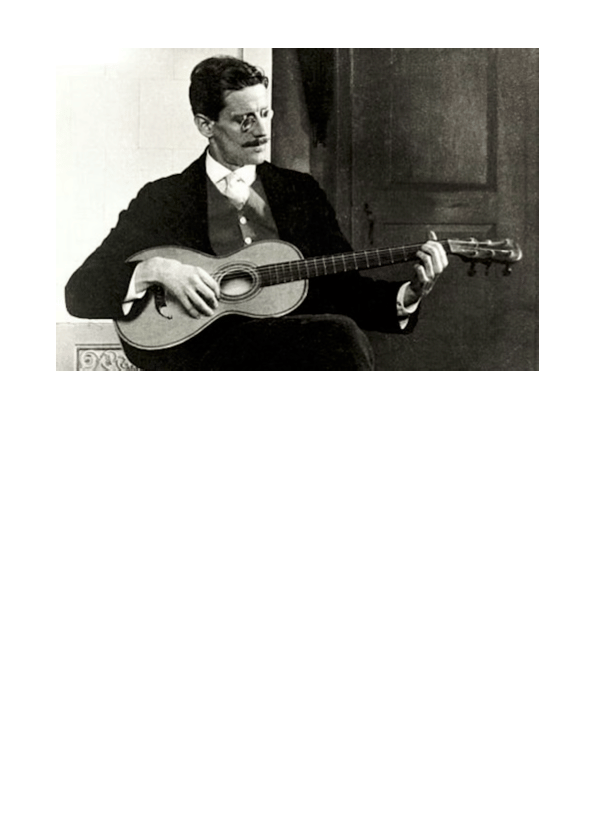
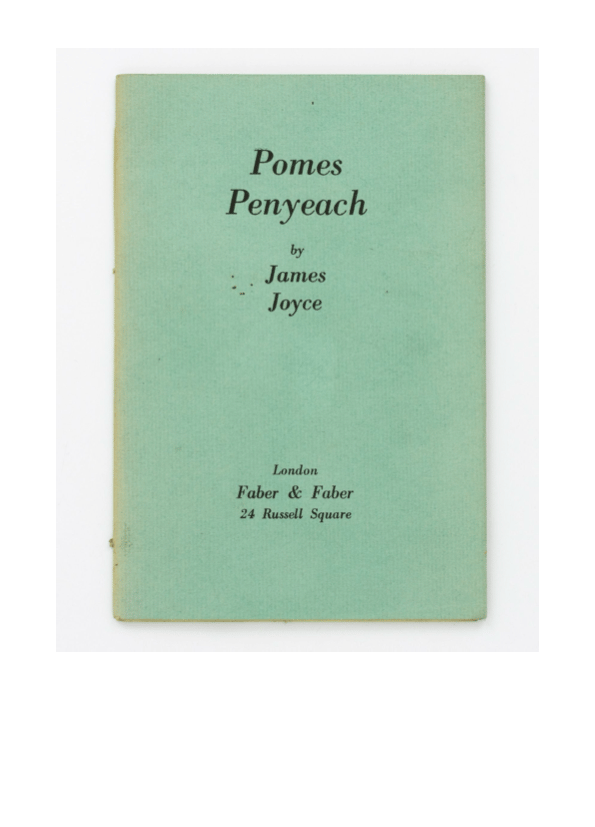
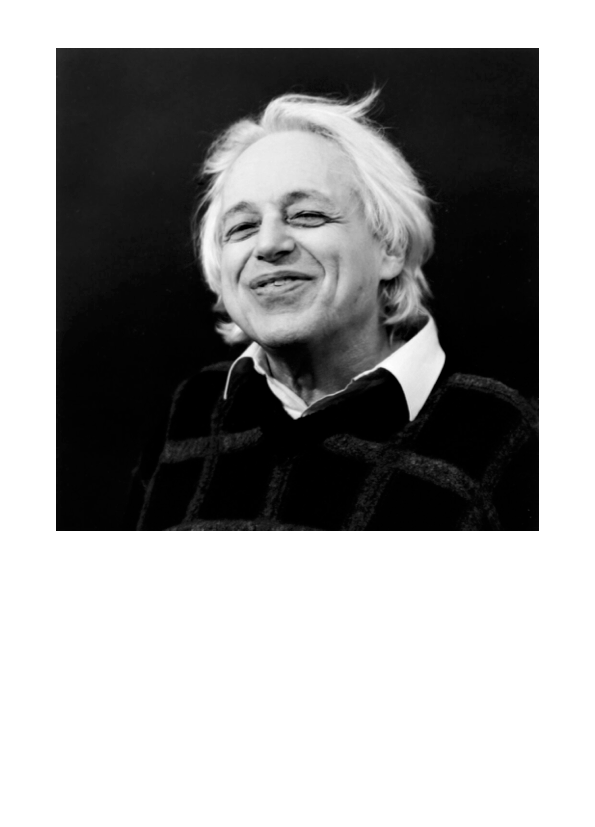

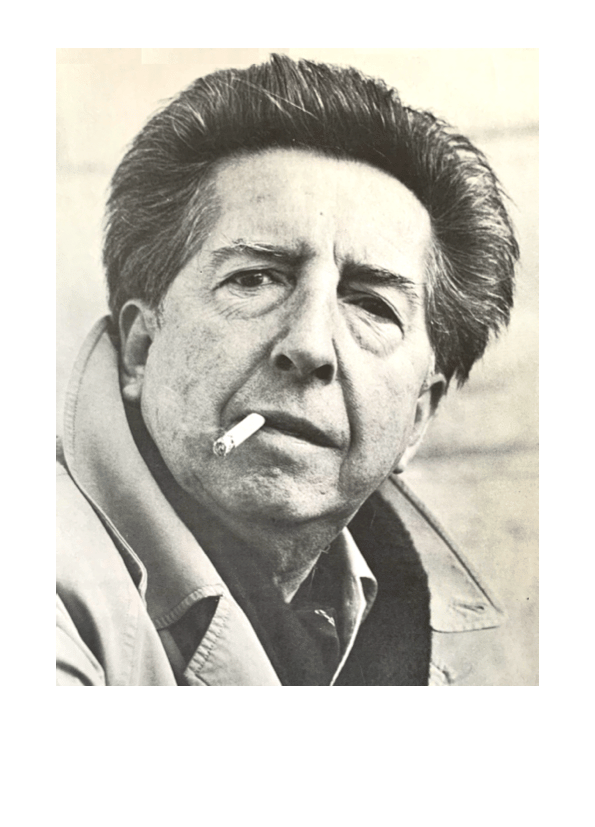

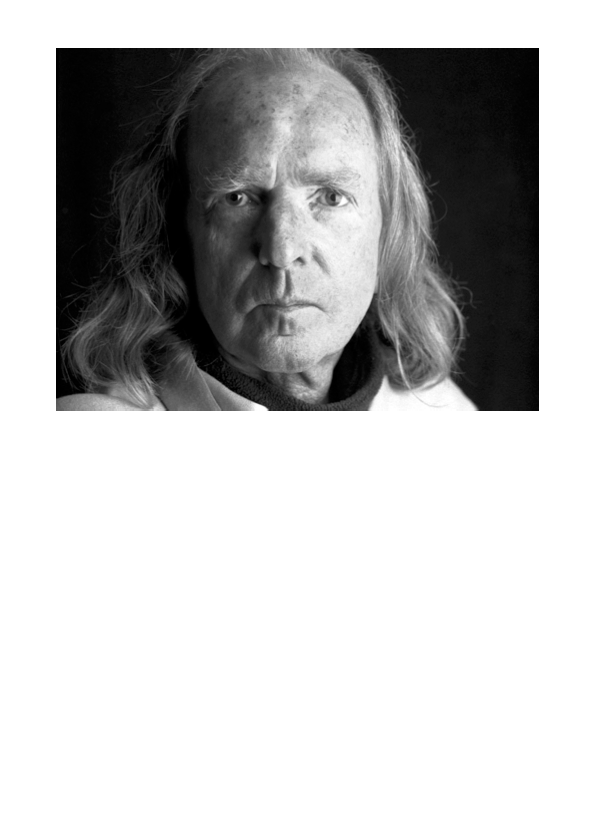
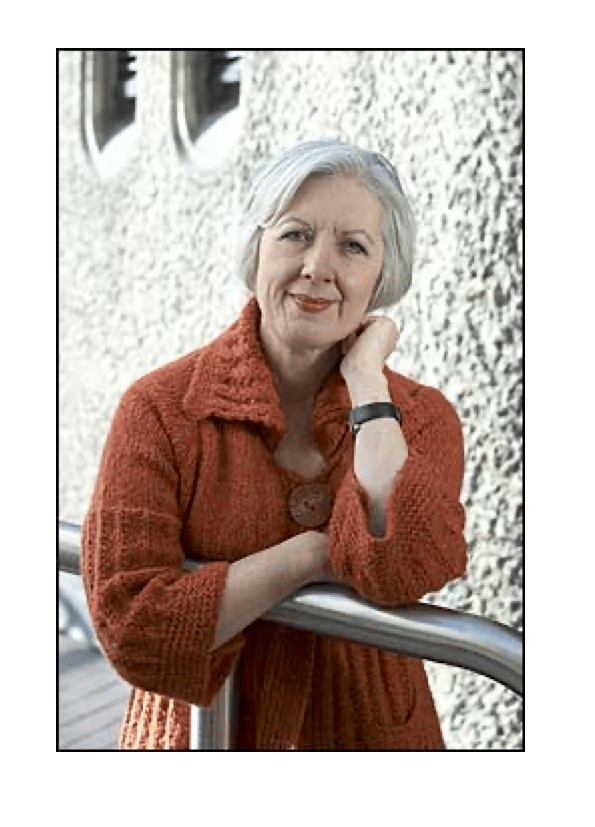
Der Sommer
Noch ist die Zeit des Jahrs zu sehn, und die Gefilde
Des Sommers stehn in ihrem Glanz, in ihrer Milde;
Des Feldes Grün ist prächtig ausgebreitet,
Allwo der Bach hinab mit Wellen gleitet.
So zieht der Tag hinaus durch Berg und Tale,
Mit seiner Unaufhaltsamkeit und seinem Strahle,
Und Wolken ziehn in Ruh`, in hohen Räumen,
Es scheint das Jahr mit Herrlichkeit zu säumen.
Friedrich Hölderlin (1770-1843)
When You Are Old
When you are old and grey and full of sleep,
And nodding by the fire, take down this book,
And slowly read, and dream of the soft look
Your eyes had once, and of their shadows deep;
How many loved your moments of glad grace,
And loved your beauty with love false or true,
But one man loved the pilgrim soul in you,
And loved the sorrows of your changing face;
And bending down beside the glowing bars,
Murmur, a little sadly, how Love fled
And paced upon the mountains overhead
And hid his face amid a crowd of stars.
W.B. Yeats (1865-1939)
Star of the County Down
Near Banbridge Town in the County Down
One morning last July
A boreen green came a sweet colleen
And she smiled as she passed me by
She looked so sweet from her two bare feet
To the sheen of her nut brown hair
Such a coaxing elf, sure I shook myself
For to see I was really there.
From Bantry Bay down to Derry Quay
And from Galway to Dublin Town
No maid I've seen like the brown colleen
That I met in the County Down
As she onward sped, sure I scratched my head
And I looked with a feelin' rare
And I says, says I, to a passer-by
"Whose the maid with the nut brown hair?"
He smiled at me and he says's, says's he
"That's the gem of Ireland's crown
Young Rosie McCann from the banks of a Bann
She's the star of the County Down"
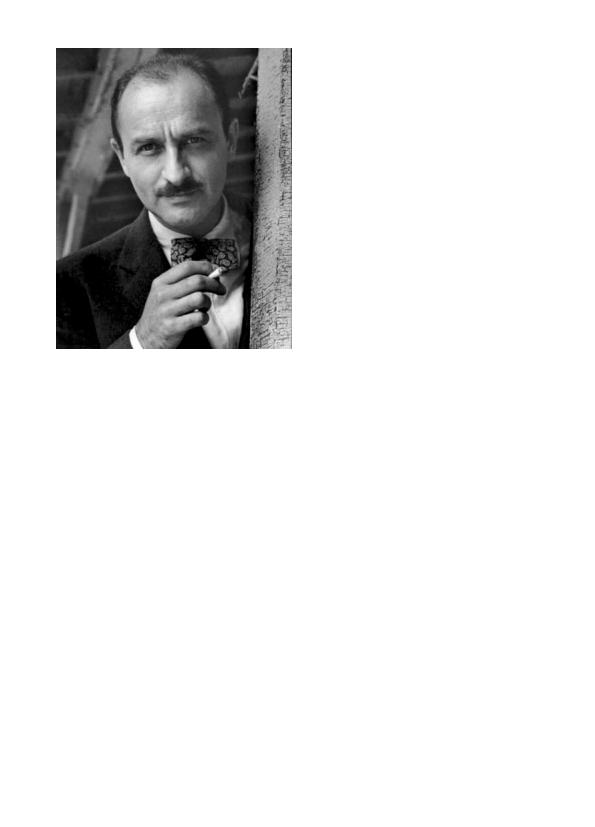
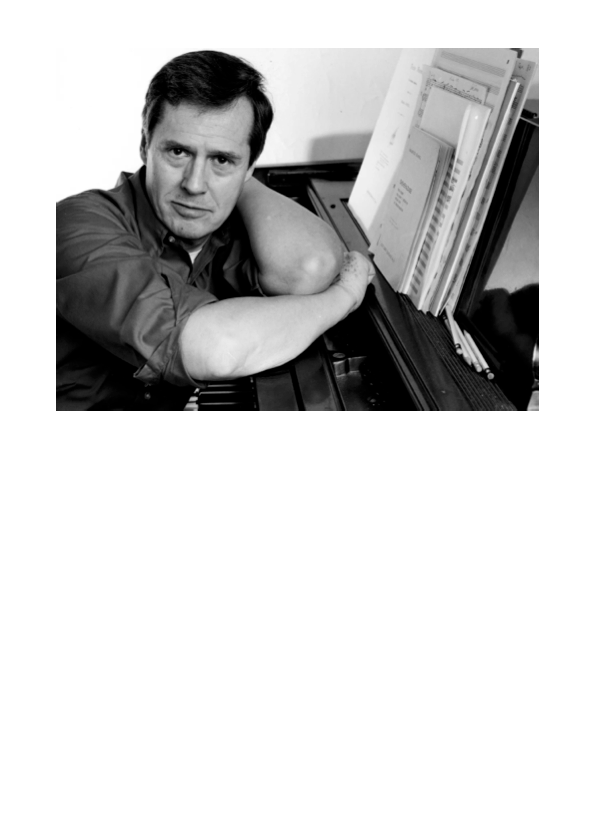
o by the by
has anybody seen
little you-I
who stood on a green
hill and threw
his wish at blue
with a swoop and a dart
out flew his wish
(it dived like a fish
but it climbed like a dream)
throbbing like a heart
singing like a flame
blue took it my
far beyond far
and high beyond high
bluer took it your
but bluest took it our
away beyond where
what wonderful thing
is the end of a string
(murmurs little you-I
as the hill becomes nil)
and will somebody tell
me why people let go
e.e.cummings
An Incident
In one of the fights before Atlanta, a rebel soldier, of large size, evidently a young man, was mortally wounded top of head, so that the brains partially exuded.
He lived three days, lying on his back on the spot where he first dropt.
He dug with his heel in the ground during that time a hole big enough to put in a couple of ordinary knapsacks.
He just lay there in the open air, and with little intermission kept his heel going night and day.
Some of our soldiers then moved him to a house, but he died in a few minutes.
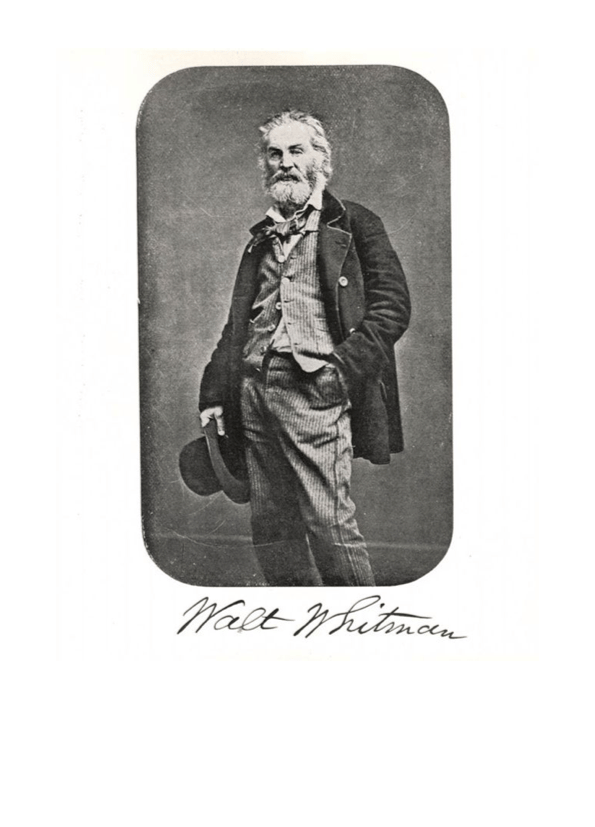
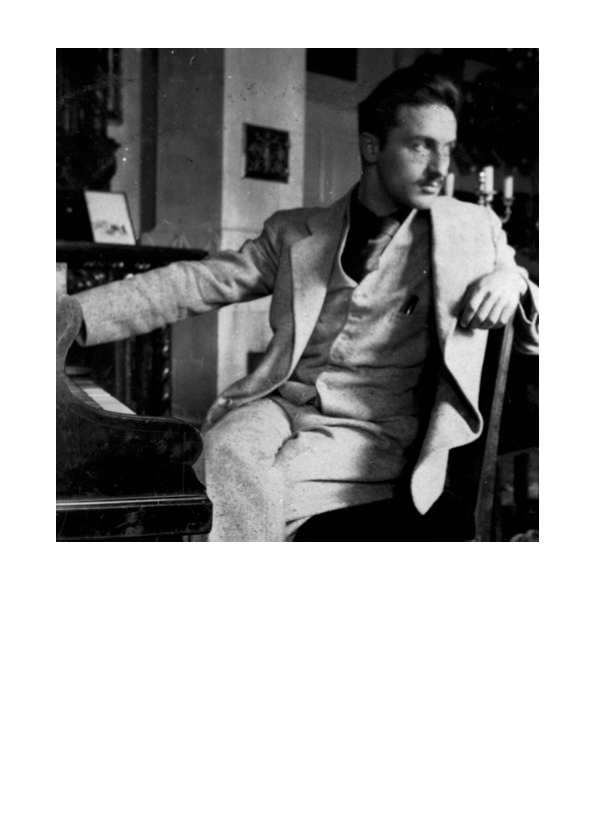
Ned Rorem
Marc Blitzstein
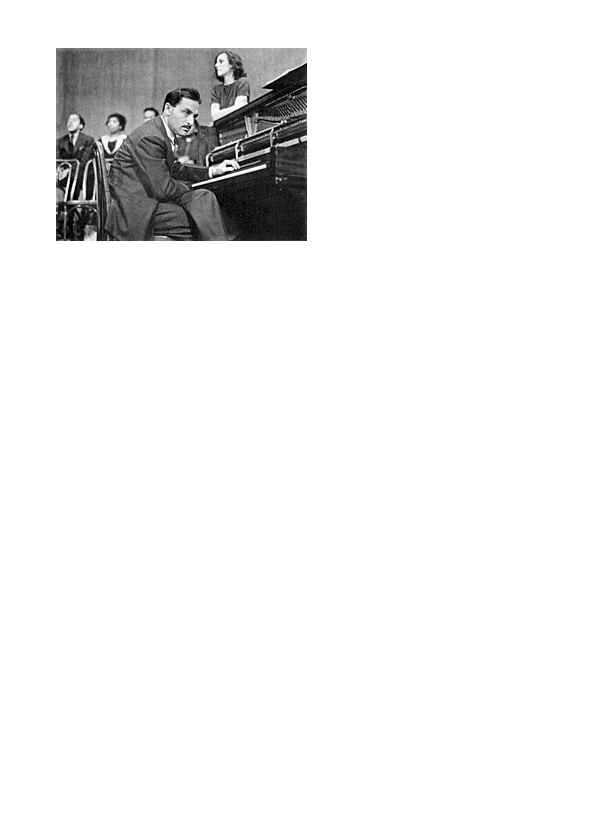
Marc Blitzstein playing for
The Cradle Will Rock,
New York, 1937
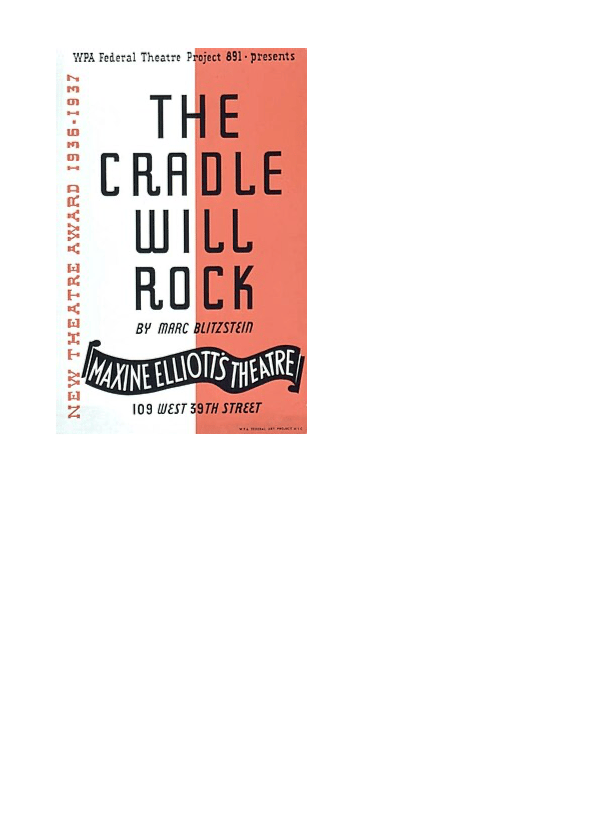
Das Modern Song Kollektiv